
Last updated November 22, 2026
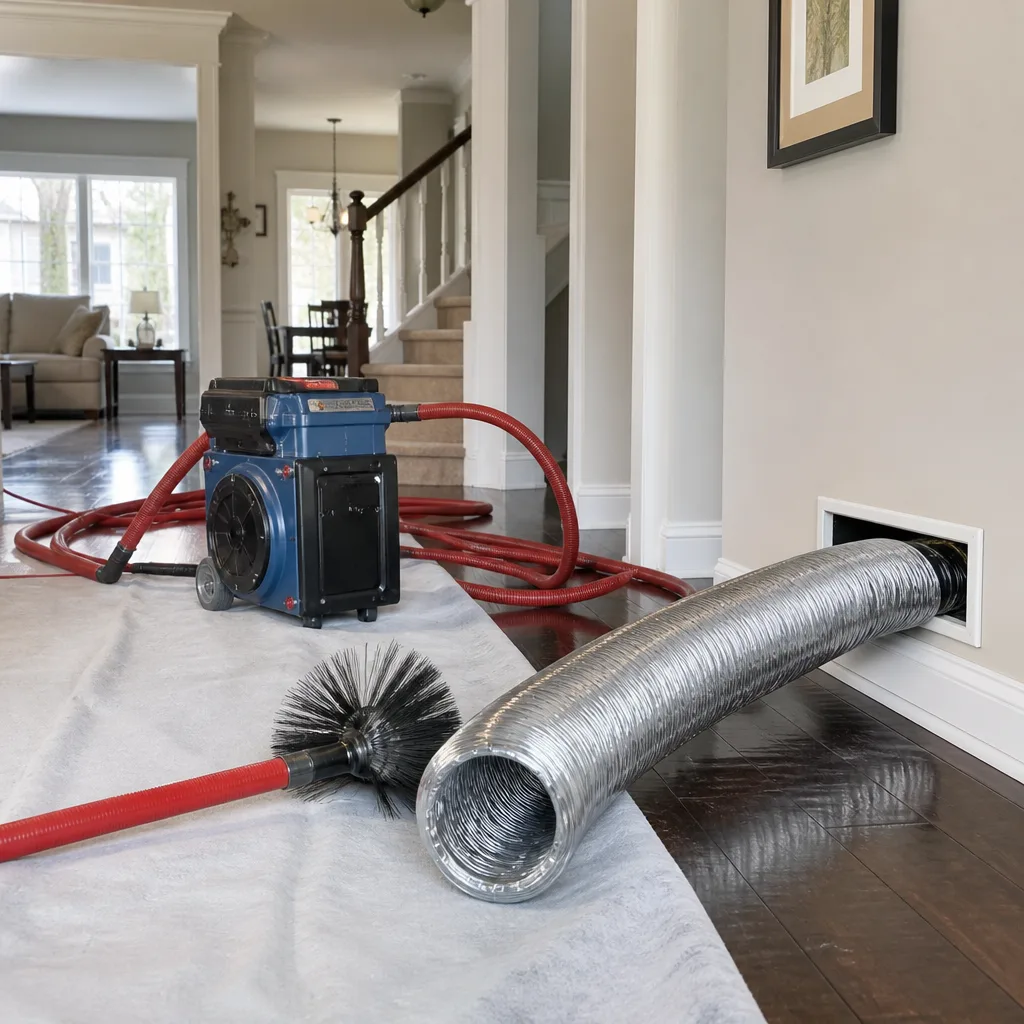 Whole-home duct cleaning
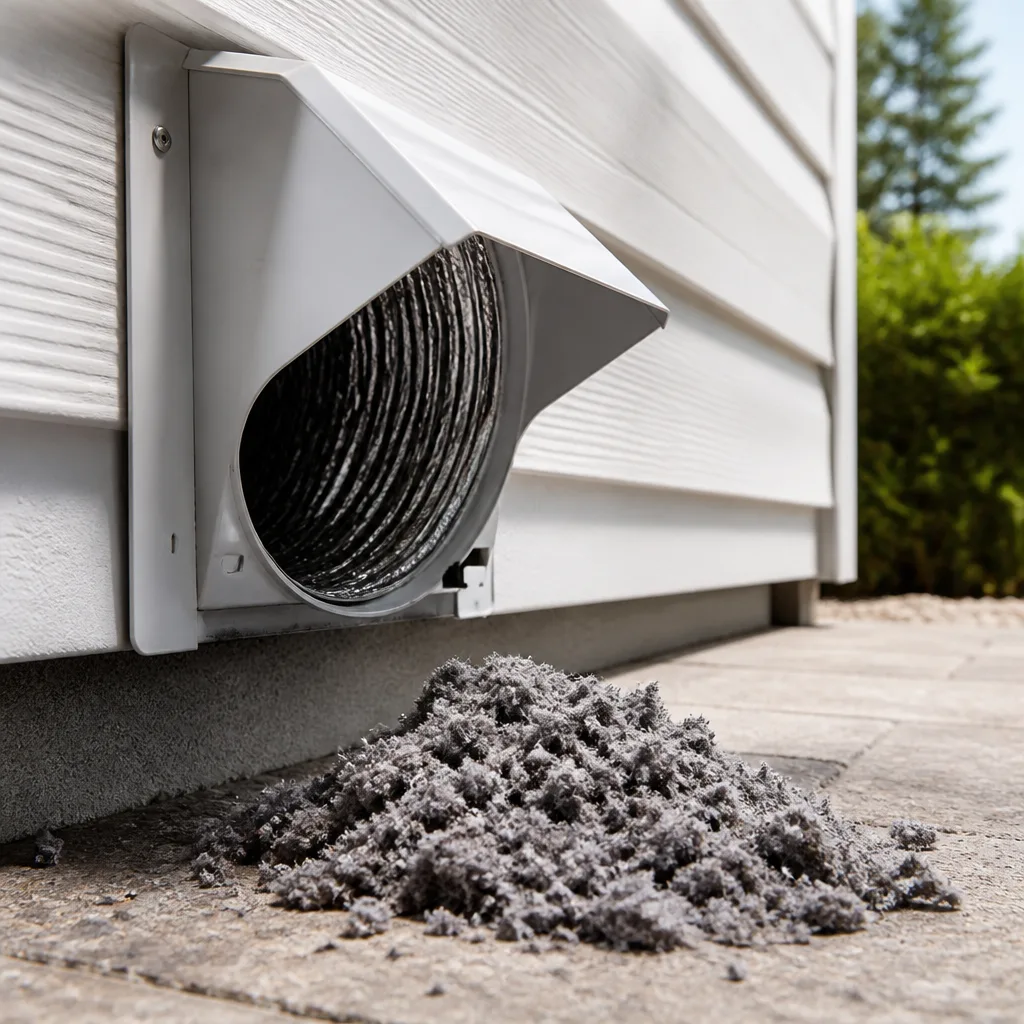 Dryer vent cleaning
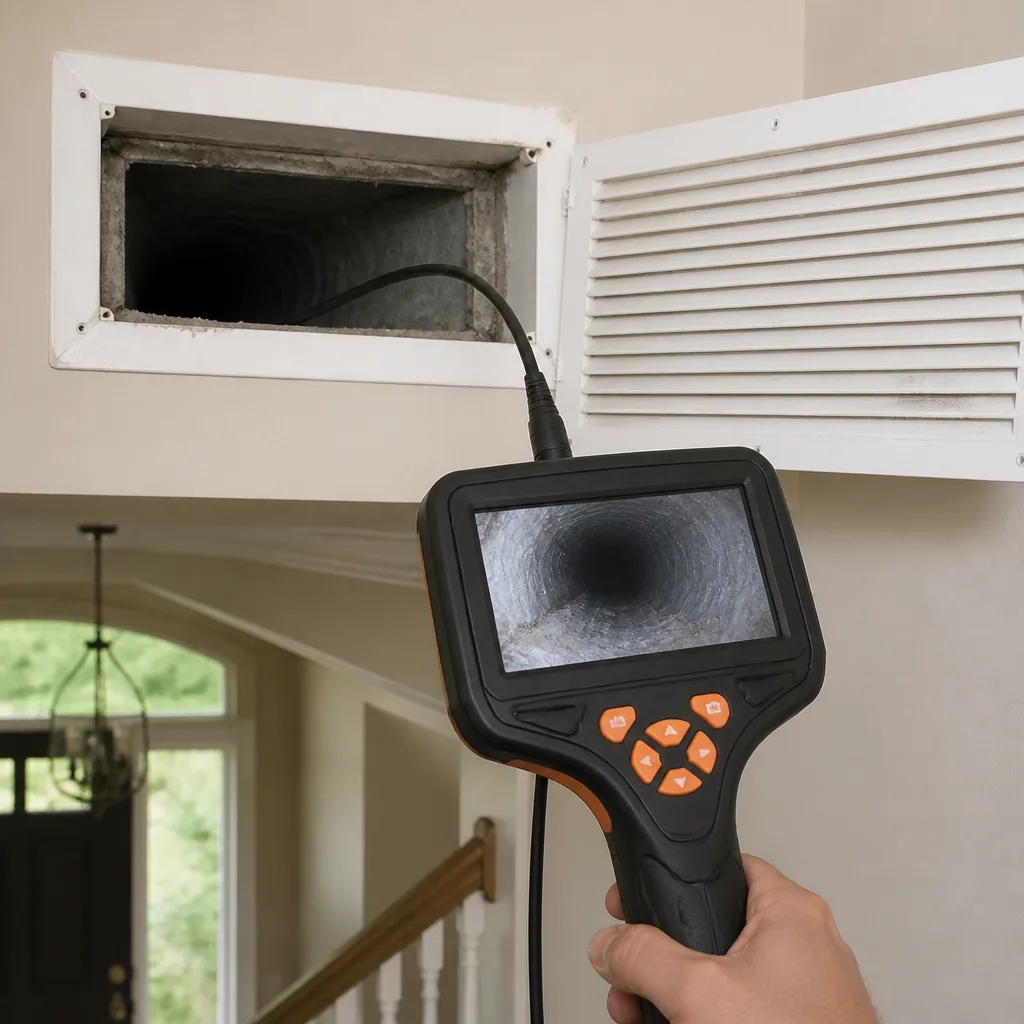 Camera inspection
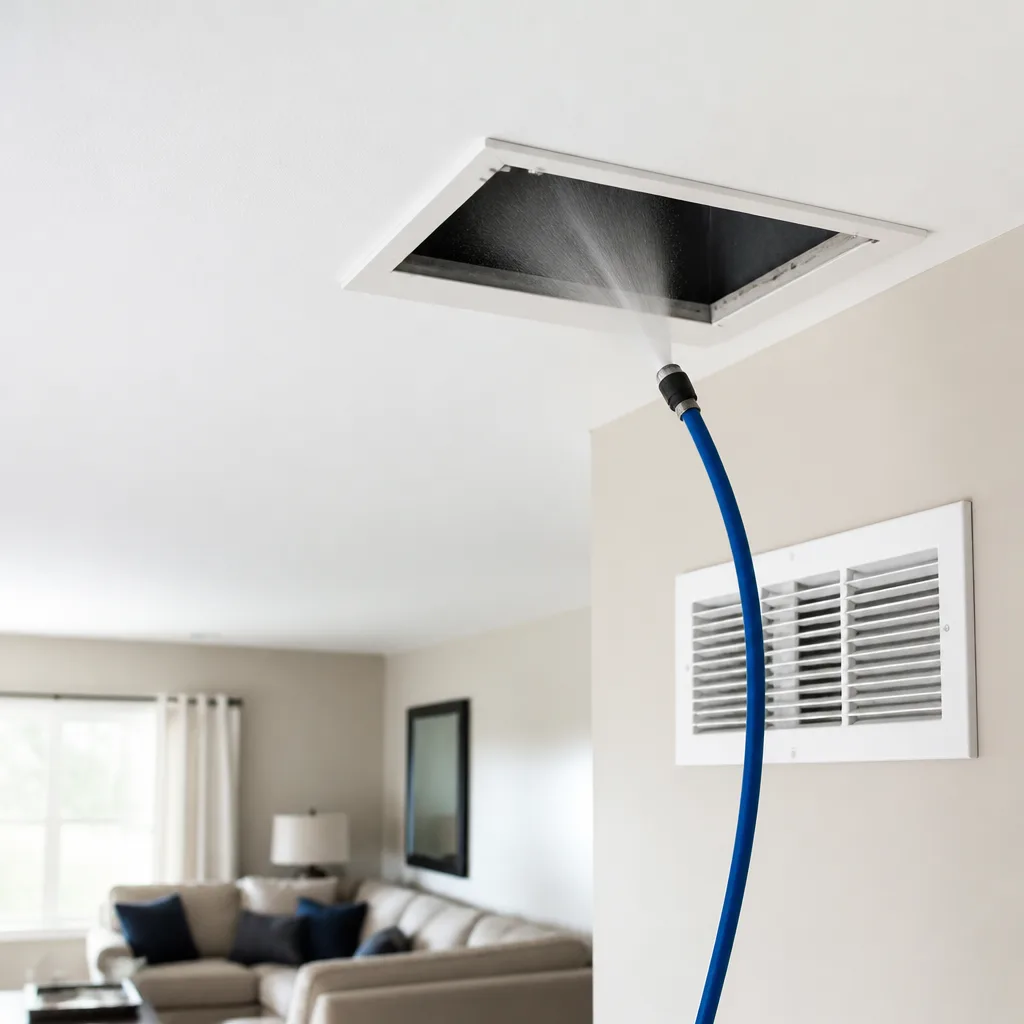 Sanitizing & deodorizing
Whole-system duct and dryer vent check with before-and-after photos - you see exactly what came out of your vents
That "$99 whole-house special" is a bait ad - the real number appears once they are in your hallway, or the "clean" is a shop-vac at the register. We photograph the inside of your ducts before and after instead.
Air Duct Cleaning Warning Signs: A Woodside Homeowner’s Reference Guide
Increased dust on horizontal surfaces isn’t a housekeeping problem. It’s a diagnostic signal. When reaccumulation picks up without a change in how many people live in the house or what’s happening outdoors, the first place a specialist looks is the distribution system. Most homeowners in Woodside read that signal as an HVAC problem, a bad allergy season, or just “old house smell,” and they call the wrong trade. This guide decodes what the signals actually mean, separates symptoms that come from the supply side of the system from symptoms that come from the return side, and tells you when a sign crosses the line from monitoring to action.
Quick Answer
The main warning signs that your air ducts need professional attention are: dust reaccumulating faster than it used to, visible dust streaks around supply registers, musty or burning odors on first heat activation, uneven heating and cooling between rooms, a filter that loads up unusually fast, and any recent renovation, water damage, or rodent activity in the home. Visible surface mold at a register face is a sign that moisture is reaching that component, not proof that the entire duct system is colonized. Call for an inspection when two or more of these appear together.
Styles & brands we work with
- Whole-home duct cleaning
- Dryer vent cleaning
- Camera inspection
- Sanitizing & deodorizing
Table of Contents
- Supply-Side vs. Return-Side Signals: Why Location Matters
- What Odors on First Heat Activation Actually Tell You
- Mold at the Register Face: What It Confirms and What It Doesn’t
- Renovation, Water Damage, and Rodent Activity: The Automatic Inspection Triggers
- Maintenance Cleaning vs. Remediation: Knowing Which You Need
- A Register-by-Register Walkthrough for Woodside Homes
- How Woodside’s Housing Stock and Seasonal Cycles Affect Duct Condition
- When a Sign Crosses from “Monitor” to “Act”
Supply-Side vs. Return-Side Signals: Why Location Matters
The single most useful diagnostic step a homeowner can take is figuring out whether the symptoms are coming from the ducts that deliver air or the ducts that pull air back. The supply side and the return side collect different kinds of buildup for different reasons, and each points to a different location inside the system.
Supply-side contamination tends to show up at the delivery end. You see it, because it lands on surfaces after the air enters the room.
- Dust streaks or dark halos around the face of a supply register. This is air carrying particulate matter that deposits at the edge of the airstream. It’s one of the earliest visible hints that particulate is traveling through the branch duct and exiting into the room.
- Uneven heating and cooling. If one bedroom runs cold while the living room runs warm, and the imbalance has grown gradually, a partially restricted branch duct can be reducing delivered airflow to that room. This is not always a duct problem, but it belongs on the shortlist.
- Visible dust plumes when the system starts. If you catch a puff of dust rising out of a supply register right after the blower engages, particulate has settled inside the branch and is being lifted by the first airstream.
Return-side contamination is quieter, because the return pulls air in rather than throwing it out.
- Odors that appear anywhere in the house, especially when the system is running. The return draws air from multiple rooms and concentrates it before it reaches the air handler. Odor that seems to have no source in the room is often coming from the return trunk.
- A filter that loads up far faster than it used to. The return-side filter catches what the system draws back. A filter that clogs in weeks instead of months is telling you there is more particulate in the air being pulled back than there used to be.
- Weak airflow overall, and a system that runs longer than it did. A restricted return starves the whole system. Reduced return airflow affects every supply register equally, so it’s easy to mistake for a failing blower.
When someone calls us about dust problems in Woodside, we ask about supply-side and return-side symptoms separately, because the answer changes where the inspection goes first. A dusty register pattern points at branch ducts. A fast-loading filter points at the return trunk and the air handler cabinet. Both point at the same conclusion: the system is moving particulate it shouldn’t have to.
What Odors on First Heat Activation Actually Tell You
Smell is the most misinterpreted of all the air duct cleaning warning signs, because the type of smell points to a specific component of the system, and each of them means something different. Two of the smells that Woodside homeowners describe most often are musty odor and a burning or scorched smell when the heat first comes on for the season.
Musty odor on first heat activation is a moisture story. It is common in homes where the air conditioning ran through summer and then the system sat for a stretch before heat was called for the first time. Air conditioning produces condensate. If that moisture stays in the air handler cabinet, on the evaporator coil, or on interior duct surfaces near the coil, it becomes an environment that supports microbial growth. When the heat comes on the first time, warmth accelerates volatilization of the compounds that growth produces, and the house fills with that damp smell all at once. It fades. It also returns next season if the moisture source is still there. The musty odor isn’t a heat problem at all. It’s a sign to have the coil and cabinet inspected, and normally a sign the ducts and coil need cleaning.
A burning or scorched smell is a different story, and it deserves more attention than a musty one. There are two ordinary causes.
- Dust burning off the heat exchanger at first activation. This is the classic “first heat of the season” smell. Dust has settled on the heat exchanger over the off-season, and when the burners fire, that dust cooks off. This fades within a few hours of running.
- A dust layer inside the supply trunk. If the smell does not fade and persists through the heating season, it usually means a settled layer of dust on internal surfaces near the heat source is being heated with each cycle. That is a duct-condition issue, not a heat-exchanger issue.
If the smell is acrid, smells like burning plastic, or has the sharp tang of an electrical problem, stop using the system and get it inspected. Those are not typical dust odors and they cross into a different category of concern.
Some odors point at the wrong cause entirely. A rodent odor, distinct from musty and very different from burning, is a sign of animal activity in the duct system or the air handler cabinet. That’s not a cleaning job in the ordinary sense. It’s a remediation job, and it needs an inspection before anything else happens.
Mold at the Register Face: What It Confirms and What It Doesn’t
Homeowners understandably react strongly to mold. Finding a colony at the face of a supply register is alarming, and how you read that finding matters enormously, because the visible surface you can see at a register is a small and specific location in a much larger system.
Visible mold at a register face confirms one important thing: moisture is reaching that component. That’s it. It does not confirm that the trunk lines are colonized, that the interior of the ducts is contaminated, or that the entire system requires remediation. Surface mold at the register face is the airway-adjacent location where condensation tends to form when the register gets cold and the room is warm and humid. It is the first place moisture shows up. It is not necessarily the last.
What you can’t see from a register face is the inside of the duct. Moisture can collect further in if the system has poor return airflow, insulation problems, or condensation issues at the air handler. Determining whether mold at the register face is a localized problem or a symptom of a larger one requires an inspection of the duct interior and the coil cabinet.
In our experience across Woodside, when we find mold at the register face, the picture usually breaks down into two possibilities:
- Localized condensation on the register. The system itself is dry, the duct interior is clean, and the register was the point of contact with humid room air. Clean the register and correct the cause of condensation (frequently a gap between the register face and the drywall, or a register that sits on an exterior wall).
- Moisture traveling through the system. The register is the visible edge of a moisture pattern that extends upstream, and the inspection reveals microbial presence on the coil or interior duct surfaces. This calls for full cleaning and sanitizing, not a wipe-down of one register.
If you find mold at a register face in a Woodside home, don’t panic, don’t reach for a spray bottle, and don’t assume the worst. Do get the system inspected so you know which of those two situations you’re actually in. The right answer is determined by the inspection, not by the visible edge of one register.
Renovation, Water Damage, and Rodent Activity: The Automatic Inspection Triggers
Most duct cleaning warning signs are matters of judgment and timing. A handful are not. Three types of event should trigger an inspection regardless of when the system was last cleaned, because each one introduces a specific kind of contamination into the ducts that wasn’t there before.
- Recent renovation. Drywall dust, sawdust, insulation fibers, and fine particulate from sanding and demolition travel into the return system and settle inside the ducts. The system pulls them in; it doesn’t push them out. A renovation is one of the most reliable single reasons for a duct cleaning, even in a home whose ducts were in good condition before the work started.
- Water damage. Any water event that touched the system (a supply-line leak, flooding in a mechanical closet, a condensate pan that overflowed) puts moisture into a contained, warm, dark environment. That’s the growth condition. The system doesn’t have to feel wet by the time you call. Once it has been wet, it needs inspection.
- Rodent activity. Rodents find their way into duct systems and into air handler cabinets from time to time. The problem isn’t the animal itself; it’s the contamination left in the system after the animal is dealt with and the entry point closed. Cleaning alone, without containment and sanitizing, is inadequate when animal activity is the cause.
Two other triggers belong on the same list, even though they’re more subtle. A move-in to a home whose duct history you don’t know is worth an inspection, since you have no baseline for what the previous residents did. And any system you can’t confirm was cleaned in recent memory is worth a look, because “we don’t remember” almost always means the ducts have been running unchanged for a long time.
For a renovation or move-in scenario in Woodside, call for an estimate before the system runs any more than it has to. The longer a renovation layer sits in the ducts and gets distributed into the living space, the more of it ends up on your horizontal surfaces. Our air duct cleaning begins with an inspection that determines whether the renovation layer is confined to the return trunk or has reached the branches.
Maintenance Cleaning vs. Remediation: Knowing Which You Need
Not every warning sign indicates the same kind of job. This is where most consumers get taken advantage of, because a cleaning offer that looks like one price turns into a very different scope of work once a technician is actually at the door. The most valuable piece of knowledge you can walk in with is the difference between a maintenance cleaning and a more complex remediation, and the inspection is what tells you which one applies.
Maintenance cleaning is the routine case. The system has accumulated ordinary buildup of household dust over time, the ducts are dry, there’s no animal activity, no microbial presence, and no structural damage. A full commercial-equipment cleaning of the supply and return system is what’s needed, and in most cases one flat price per system is the right pricing structure.
Remediation or a system inspection first is the more complex case, and it applies when one of the following is present:
- Animal activity in the system or the air handler cabinet (contamination needs to be cleaned and the system sanitized, and cleaning without sanitizing doesn’t solve it).
- Active water intrusion or microbial growth confirmed inside the ducts or on the coil (the moisture source needs to be addressed first, or the cleaning won’t hold).
- Visible mold beyond the register face, or the inspection reveals growth on interior duct surfaces.
- Disconnected sections, unsealed joints, or duct runs with damage (cleaning a system that leaks is partly wasted; sealing is part of the solution).
- A renovation layer that is very heavy in the return system and may need more than a standard cleaning pass.
When any of those are present, the correct first step is an inspection that identifies the scope before any cleaning begins, and the scope is what the price reflects. If a company can’t tell you whether you need a maintenance cleaning or remediation, that’s the first warning sign in the whole conversation, and it’s a good reason to get a second opinion.
We use Abatement Technologies containment and negative-air equipment on jobs specifically because remediation work requires capturing the dislodged contaminants rather than pushing them through the house. The same category of tool is used in restoration and remediation work, and it’s the difference between a cleaning that leaves the house dustier than it started and one that doesn’t. For problems that include disconnected or damaged runs, our HVAC cleaning covers the air handler cabinet and coil, while air duct cleaning in Woodside covers the distribution system itself.
A Register-by-Register Walkthrough for Woodside Homes
A systematic walkthrough of the registers is the single most useful thing a homeowner can do in fifteen minutes, and it gives you a written record that makes a professional inspection faster and more accurate. Do this in the order below. Take notes on each register.
- Look at the register face first. Note any dust streak, dark halo, or visible mold. Photograph it. Do this before you touch anything, because dust patterns are easy to disturb.
- Look at the ceiling or wall around the register. A dark smudge on the paint around a register is a sign of airflow leakage; air is escaping around the register face instead of through the duct. That’s a sealing issue, and it’s common in older Woodside homes where the register face no longer sits tight against the drywall.
- Look at the horizontal surface below a supply register. A shelf, a tabletop, or the top of a door frame. Dust accumulates there first. Note the rate at which it comes back compared with what you’re used to.
- Run your hand near the register while the system runs. A supply should push steady air. A return should pull. A supply that barely moves air, or a return that fights back against your hand, is worth noting in the direction of the air handler.
- Check the air handler cabinet and filter. Look at the filter loading pattern. A uniformly loaded filter is ordinary. A filter loading unevenly, or a filter that clogs very quickly, is a return-side signal. Do not open the cabinet to inspect the coil unless the system is powered down; that’s a job for a technician.
- Smell the air when the system first comes on. Note whether the smell is musty, dusty, burning, or animal. Each points at a different cause, as covered above.
- Log the date, the register location, and what you found. If you eventually decide to call, having this log tells a technician where to focus.
What you should not do during the walkthrough is remove registers and reach into the duct with a vacuum or a consumer brush kit. Consumer-level tools don’t have the agitation or containment to clean a duct properly, and a partial job done from one register end can redistribute accumulated material further into a system that was otherwise stable. That’s why our Air Duct Cleaning Woodside work is done with Rotobrush and Nikro professional duct cleaning systems rather than a shop vac; the equipment is designed to agitate and extract at the same time, and the Abatement containment keeps the dislodged material out of the room.
How Woodside’s Housing Stock and Seasonal Cycles Affect Duct Condition
Woodside’s housing mix shapes what duct systems in Woodside actually look like. The neighborhood has a substantial stock of older multi-family buildings and detached homes, several of them with duct systems that were retrofitted into structures built before forced-air heating was common. Original ductwork from those retrofits is often unsealed at the joints, which means it leaks a fraction of its air into the wall cavities and draws unfiltered air back in. That unfiltered air is the particulate source for a lot of what shows up on horizontal surfaces in a Woodside house.
The region’s seasonal swing is the other factor. New York City summers run humid enough that a cooling coil and its cabinet see heavy condensate load through August, and winters pull cold dry air into the system. That cycle of moisture in summer and dry air in winter is a stress pattern on the interior surface of the ducts and the coil cabinet. Homes with a sealing problem at the return-side joints draw more humid basement or crawlspace air into the system during the summer, which is exactly the moisture condition that supports microbial growth on interior surfaces. That is one of the reasons musty odors in Woodside show up the way they do on first heat activation, five to six months after the last humid stretch.
A few local specifics that change how we approach an inspection in Woodside:
- Multi-family buildings. Property managers in Woodside commonly deal with vertically stacked systems where each unit has its own air handler. Signs that show up in one unit rarely mean the whole building’s ducts are in the same condition, so each unit’s system is inspected on its own terms.
- Ducts in unconditioned spaces. Some Woodside retrofit systems run any uninsulated duct through basements or wall cavities. Those runs are the first to show condensation problems and the first to be worth sealing.
- Dryer vent runs. Older homes in Woodside frequently have long, multi-elbow dryer vent runs that were acceptable at installation and are worth an inspection now. Lint accumulation in a long run is a genuine fire risk, and our dryer vent cleaning is treated as its own service for that reason.
One thing that’s easy to overread: an old house doesn’t automatically need remediation. Age of the home tells you how the system was probably installed, not what condition it’s currently in. That’s what the inspection is for.
When a Sign Crosses from “Monitor” to “Act”
A single sign is rarely the trigger. Dust accumulating a bit faster than it used to, or a faint smell at first heat, is worth writing in a log and checking again next month. The honest advice, in most cases, is to monitor. The sequence that matters is when two or more signs appear together, or when one sign persists and worsens on its own.
Here’s the judgment we’d apply if you called us and described what you’re seeing:
Monitor when there is one isolated and stable sign, the system is otherwise heating and cooling well, and there has been no renovation, water damage, or animal activity. Write it down, check again in a month, and get the system inspected when it makes sense for the household to do it.
Act now when any of the following is true:
- Two or more of the warning signs in this guide are present at the same time.
- A sign appeared suddenly rather than gradually (dust that appeared out of nowhere after a specific event points to a cause, not a slow accumulation).
- Anyone in the household is experiencing allergy or respiratory symptoms that correlate with system run time.
- The system has been running in a home you just moved into and you don’t know the duct history.
- You’ve had renovation, water damage, or rodent activity since the last cleaning.
- You’ll be in the home for the long term and want a baseline inspection recorded.
The last one deserves a note. If you’re planning to stay in a Woodside home for several years, an inspection now gives you a record of what the ducts looked like before anyone cleaned them, and a written record of what condition they were in. That is the single most useful piece of evidence you can own when a future contractor tells you the ducts need something. It’s also the before-and-after reference point that makes it possible to confirm afterwards that the work was actually done.
What we don’t recommend is acting on a sign you can’t identify. If a company tells you the ducts are contaminated and can’t show you the specific evidence (register face photos, cabinet photos, filter loading patterns, or an inspection with findings you can follow) and can’t tell you whether you need a maintenance cleaning or a remediation, that’s the signal to slow down and ask questions. The costs you avoid by waiting for real findings are greater than the costs you avoid by finding the cheapest bidder.
Common Mistakes to Avoid
- Treating increased dust as a housecleaning problem. If you’re dusting more often than you used to and nothing about the household has changed, cleaning the surface isn’t the fix. The rate of reaccumulation is the signal, and it points to the air distribution system.
- Assuming a dusty register means the whole system is contaminated. Dust streaking at one register often means the branch duct feeding it has particulate. The return trunk and the air handler cabinet are a separate question, and only an inspection answers both.
- Confusing first-heat smell with a serious problem – or ignoring it when it doesn’t fade. A faint dusty smell that disappears after a few hours of running is ordinary. A burning smell that persists through the season, or any plastic or electrical smell, is not.
- Reading mold at a register as proof of system-wide mold. Surface mold at the face confirms moisture is reaching that component. It does not confirm that the duct interior is colonized. Those are two different jobs, and the inspection is what tells them apart.
- Waiting until a renovation, water event, or pest problem is well past. All three introduce contamination that settles deeper the longer the system runs. Inspect right after the event, not when the problem shows up in the living space next season.
- Hiring a company that quotes a single low figure without an inspection. A legitimate estimate requires knowing whether the job is a maintenance cleaning or a remediation. A quote without a scope of work isn’t an estimate, it’s a placeholder.
- Assuming consumer tools will do the job. A shop vac and a brush kit from a hardware store cannot agitate and extract at the same time the way a Rotobrush or Nikro system does, and it can’t contain what it dislodges. The result is often a dustier house and a partially cleaned system.
- Skipping the dryer vent because “the ducts were done.” Lint accumulation in a long dryer vent run is a leading household fire risk and is completely separate from the air duct system. It’s one of the reasons we treat dryer vent cleaning as its own service.
See the difference
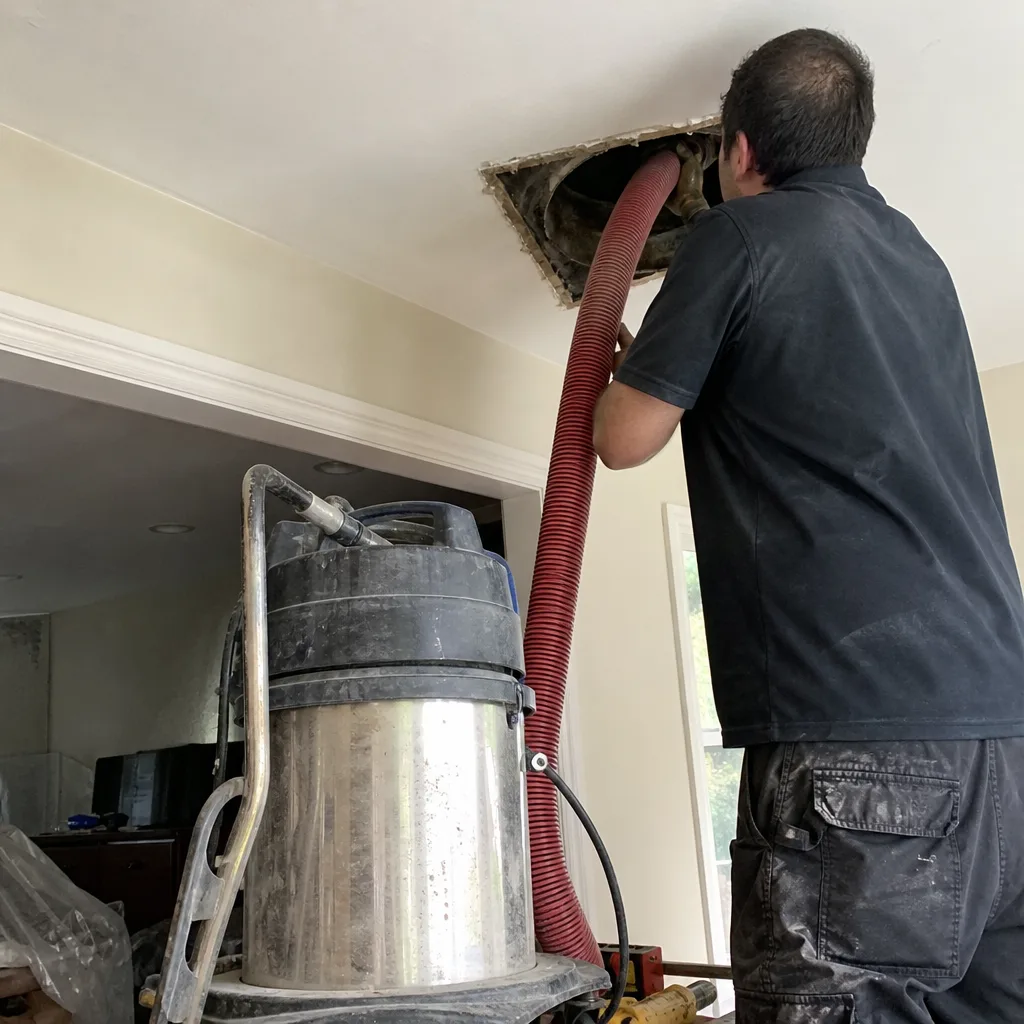 Before
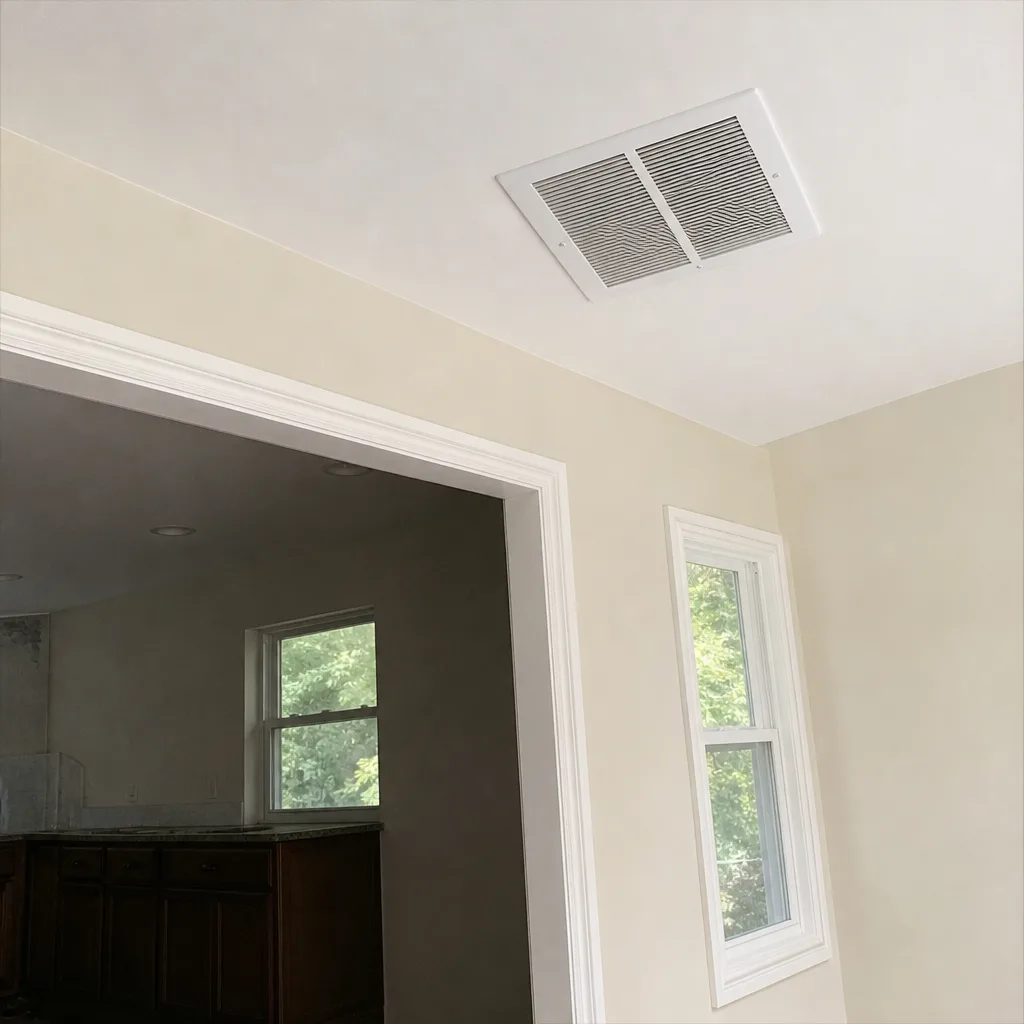 After
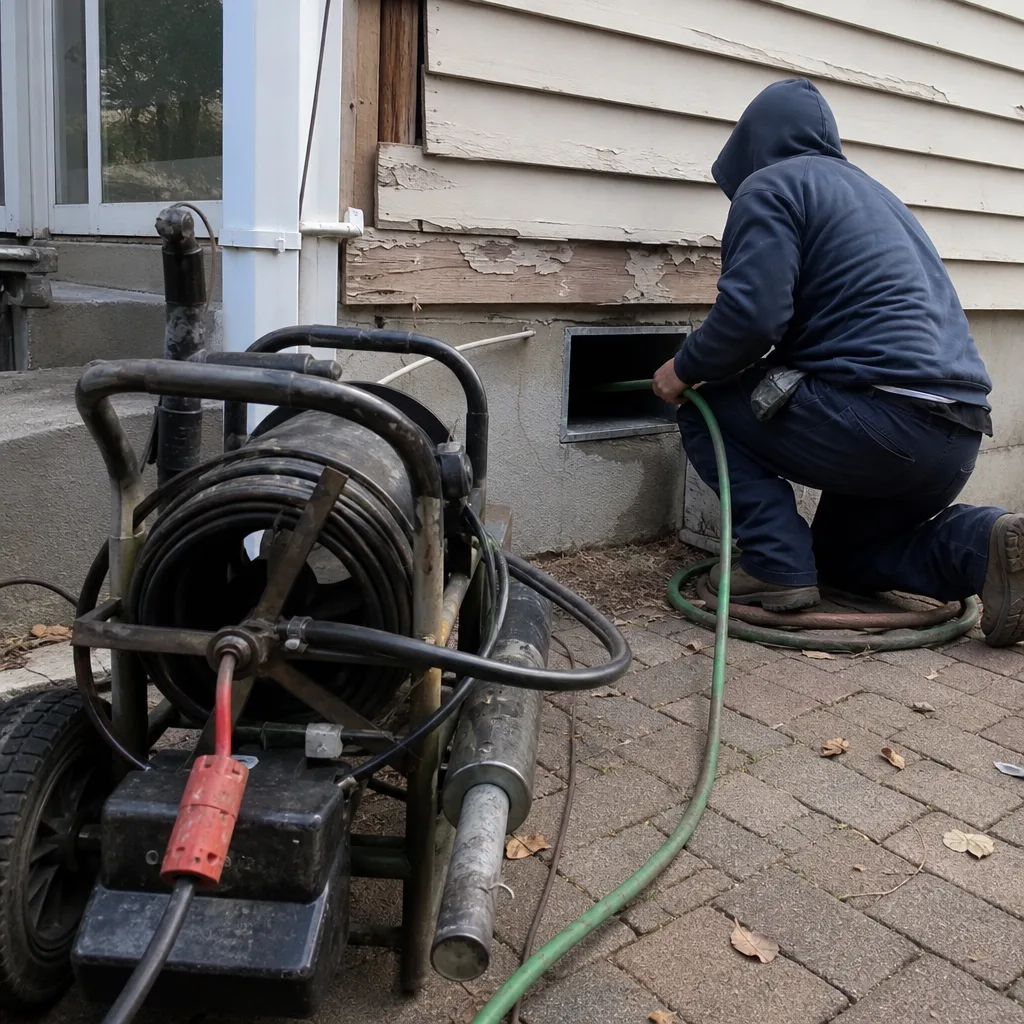 Before
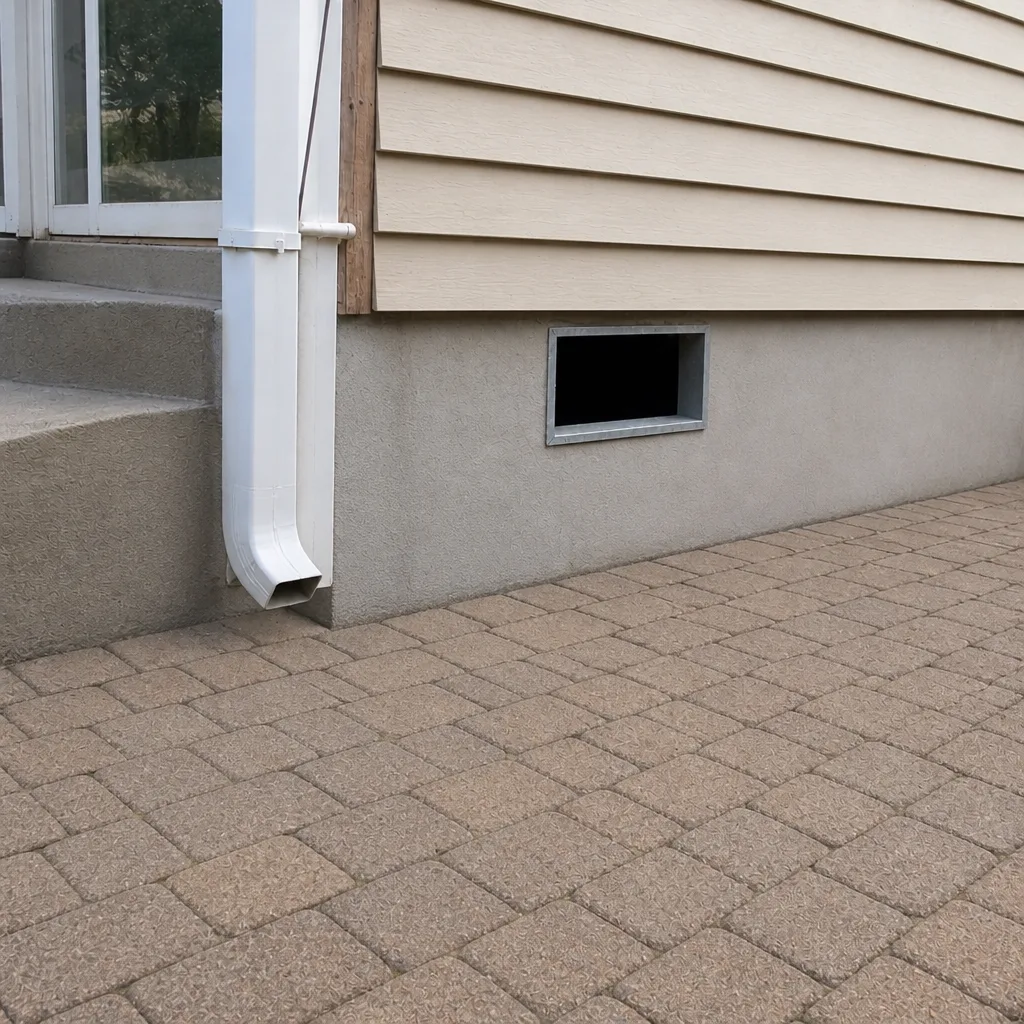 After
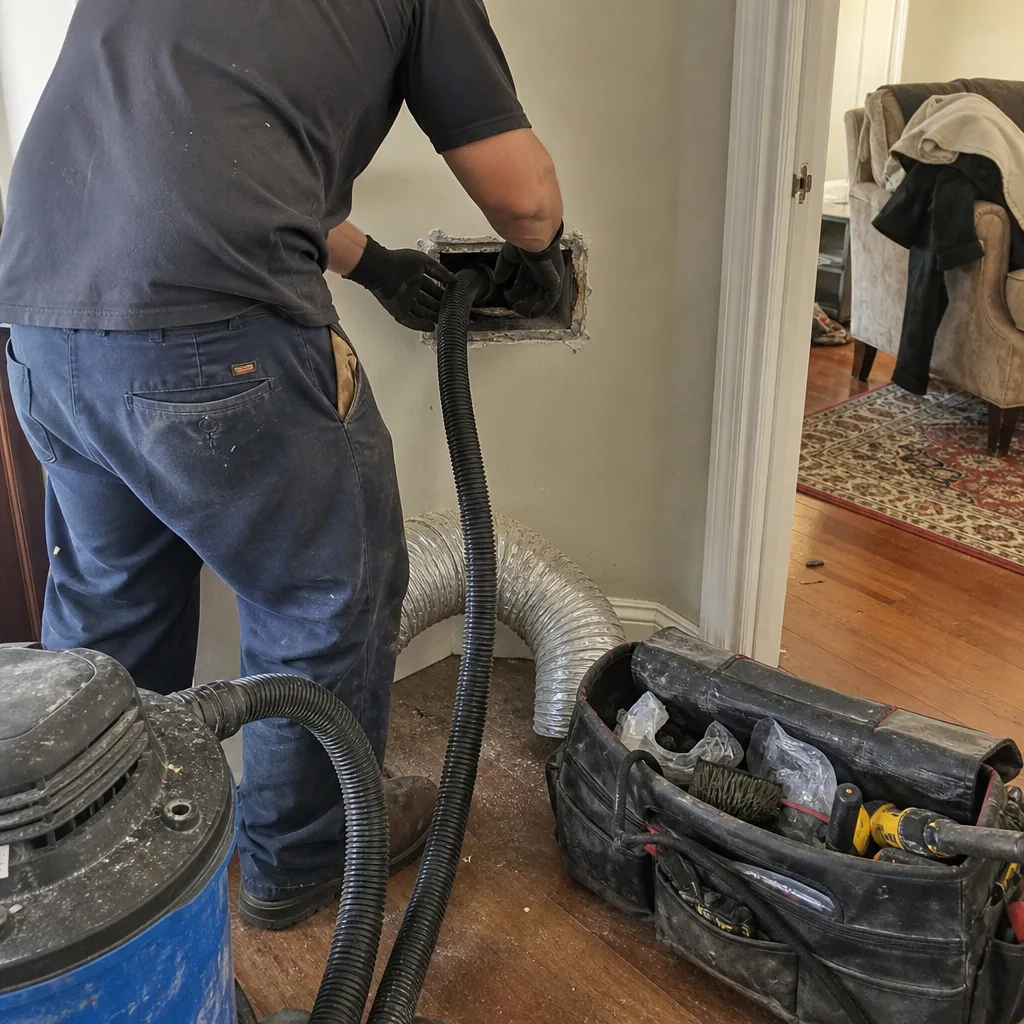 Before
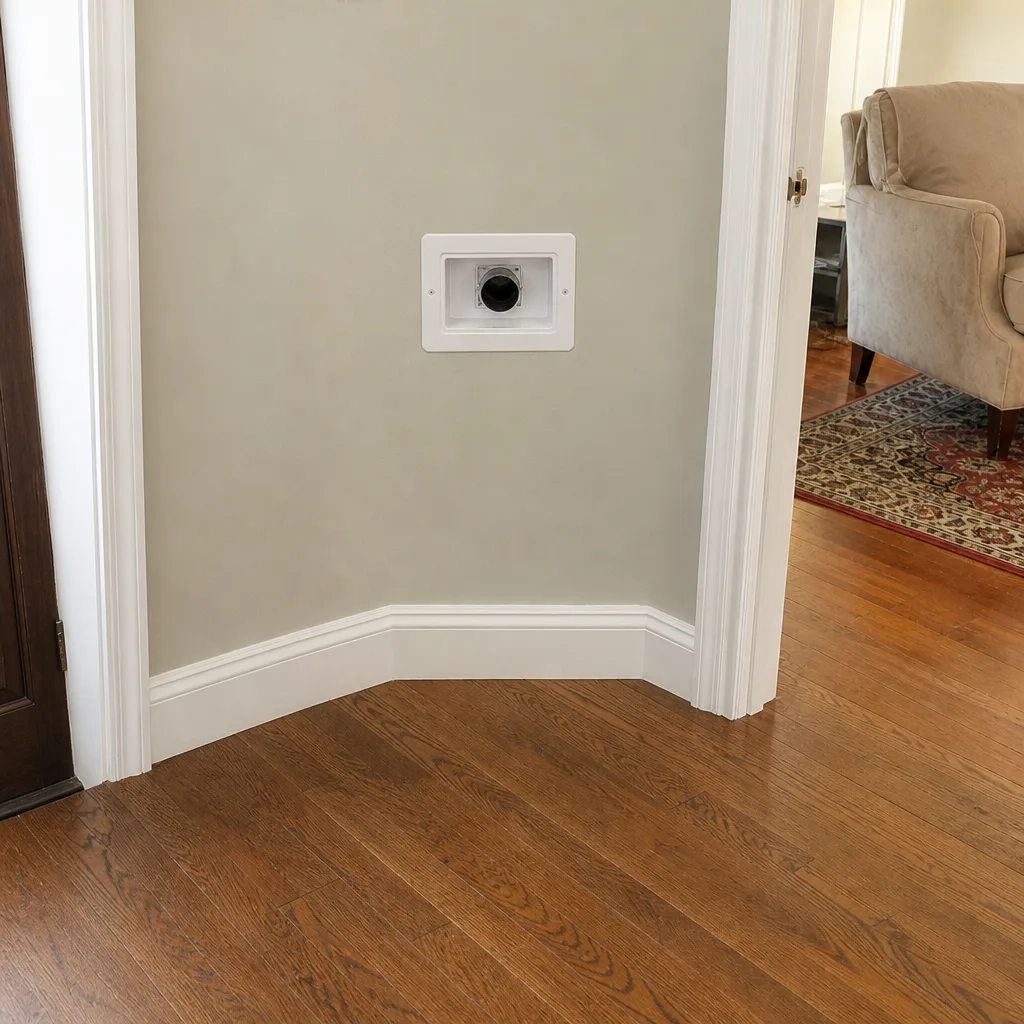 After
When to Call a Professional
Call when you have two or more of the warning signs in this guide at the same time, when a burning smell or an animal odor appears, when you’ve had a renovation, water event, or rodent activity since the last cleaning, or when anyone in the household has symptoms that correlate with the system running. Call also if the system has been running unchanged in a home whose duct history you don’t know, or if you’re moving into a Woodside home and want a baseline inspection on record.
We offer free estimates in Woodside and the surrounding neighborhoods. The local pro is presented with a clear scope of work and one flat price per system agreed before any work starts, and you get before-and-after photographs of your own ducts as part of the job. Our technicians have up to 9 years of experience, and we use Rotobrush and Nikro professional duct cleaning systems with Abatement Technologies containment. We answer the phone 24/7, and we can arrange a visit. Call (877) 792-6795 for a free estimate.
Frequently Asked Questions
You know you need cleaning when two or more specific signals appear together: faster dust reaccumulation, dust streaks at supply registers, musty or burning odors on first heat activation, uneven heating and cooling, a filter loading rapidly, or a recent renovation, water event, or pest problem. One isolated sign is often worth monitoring rather than acting on. Call (877) 792-6795 for an exact quote; estimates are free.
Dust streaks at a supply register are particulate in the air settling at the edge of the airstream as it exits the duct. It means the branch duct feeding that register is carrying particulate it shouldn’t. That can be ordinary accumulation, air leakage at the register face, or a sign of a deeper return-side problem pushing unfiltered air through the system, and an inspection tells you which.
Usually yes, and it’s a moisture problem more than a duct problem. Musty odor on first heat activation is the classic signature of microbial growth somewhere moist in the system, most often on the evaporator coil or on interior duct surfaces near the coil, that’s been sitting damp since summer. Cleaning is part of the fix, but the moisture source has to be addressed or the odor comes back next season. Call (877) 792-6795 for an exact quote; estimates are free.
Mold at a vent face means moisture is reaching that register, not that the entire duct system is contaminated. Surface mold at the register is common where a cold register meets warm humid room air. The critical question is whether the moisture is only at the register face or reaches upstream into the coil cabinet or duct interior, and that requires an inspection.
There’s no fixed calendar answer. Homes with clear systems and no renovation, water, or pest events can go a long time between cleanings, while homes that have had a renovation, a water event, or animal activity need an inspection right after the event regardless of when the last cleaning was. The honest answer is: inspect when the signs appear, and record a baseline when you move in so you have something to compare against. Call (877) 792-6795 for an exact quote; estimates are free.
Because they’re quoting different jobs or different equipment. A low quote often covers a surface pass with consumer-level tools that can’t agitate and extract simultaneously, and it doesn’t include containment, sanitizing, or a scope that distinguishes a maintenance cleaning from a remediation. We give one flat price per system, agreed before work starts, with before-and-after photos of your own ducts. Call (877) 792-6795 for an exact quote; estimates are free.
Before-and-after photographs of your own ducts, and a written scope of work for the job that identifies whether it was a maintenance cleaning or something more involved. If a company can’t show you what condition the system was in before they started and can’t tell you what was cleaned afterward, you can’t verify the work. We treat photographs as part of the job, not an extra.
It is when the signs point at one unit’s system rather than the building’s. In a multi-family building, each unit’s air handler and branch ducts are their own system, and the condition usually differs from unit to unit. Inspect each unit’s setup on its own terms rather than assuming a single cleaning applies building-wide.
The Bottom Line
Air duct cleaning warning signs are read wrong most of the time, because they look like household inconveniences and get treated like them. Faster dust accumulation, streaks at the registers, musty or burning smell on first heat, uneven temperatures, a fast-loading filter, and any recent renovation, water event, or rodent activity are each a specific signal about a specific part of the system. Read them separately, and act when two or more appear together or when one of the automatic triggers is in play.
If what you find leaves you unsure of the right course in a Woodside home, our team can walk through what you’re seeing and, if a visit makes sense, quote a scope of work with one flat price per system. Our technicians have up to 9 years of experience, we use professional-grade Rotobrush, Nikro, and Abatement Technologies equipment, and we treat the inside of your home as something worth containing and mapping properly. Call (877) 792-6795. We answer 24/7. Fast dispatch from 7am to 7pm, Sunday through Friday.
Written by the team at Air Duct Cleaning Woodside.