
Last updated November 22, 2026
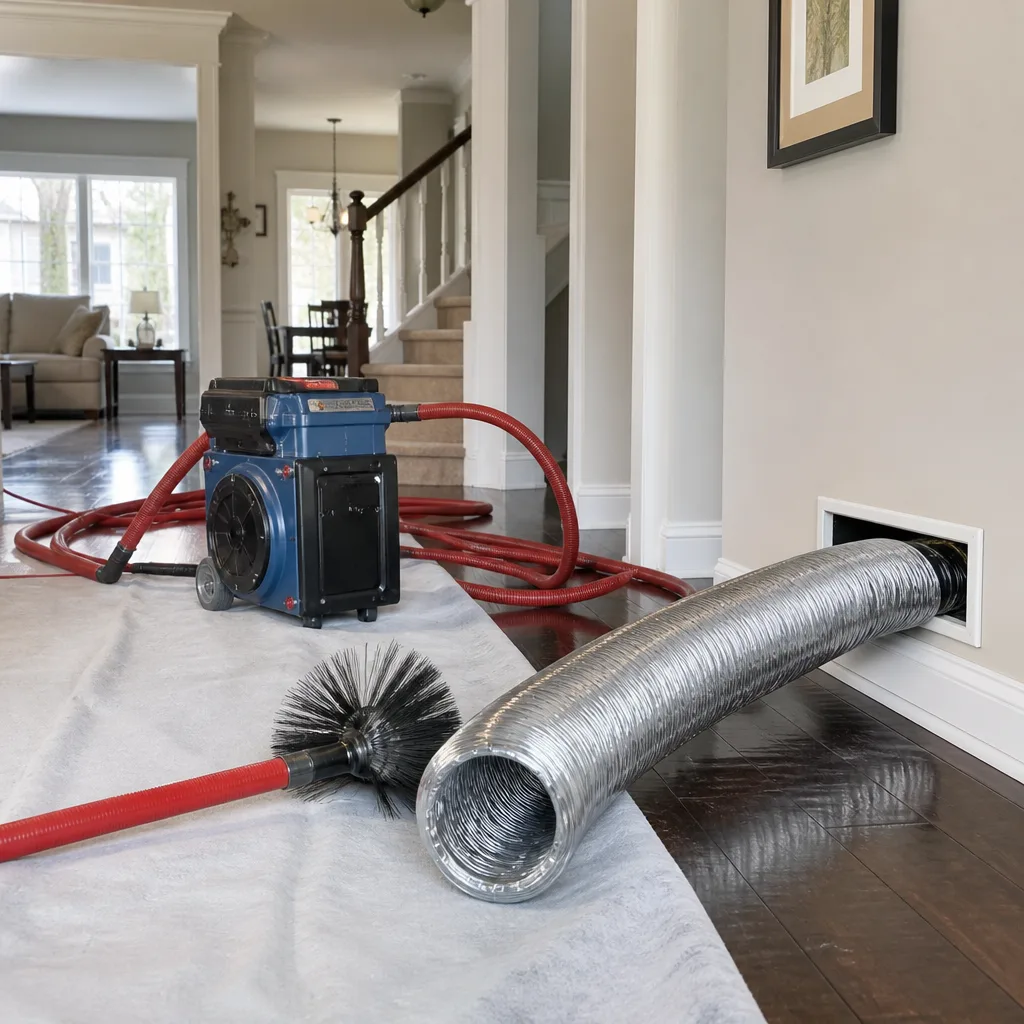 Whole-home duct cleaning
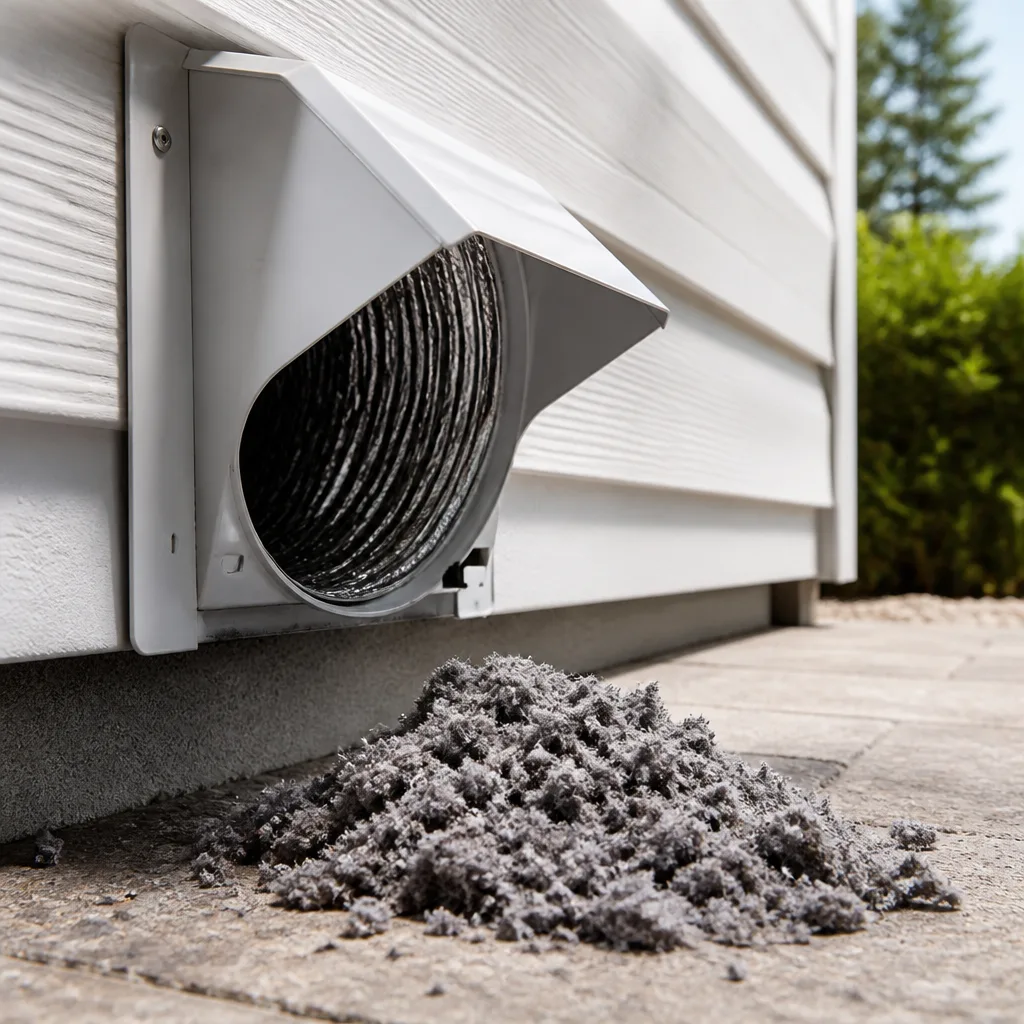 Dryer vent cleaning
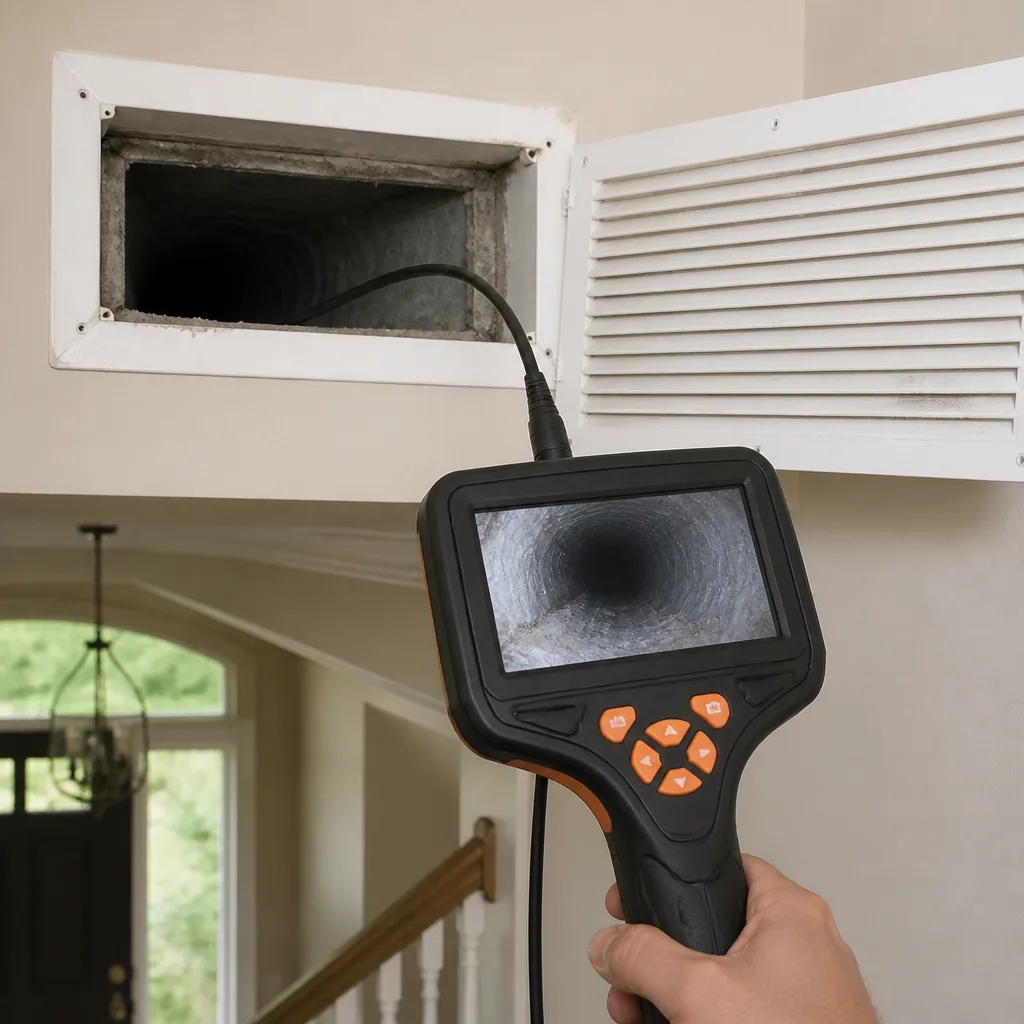 Camera inspection
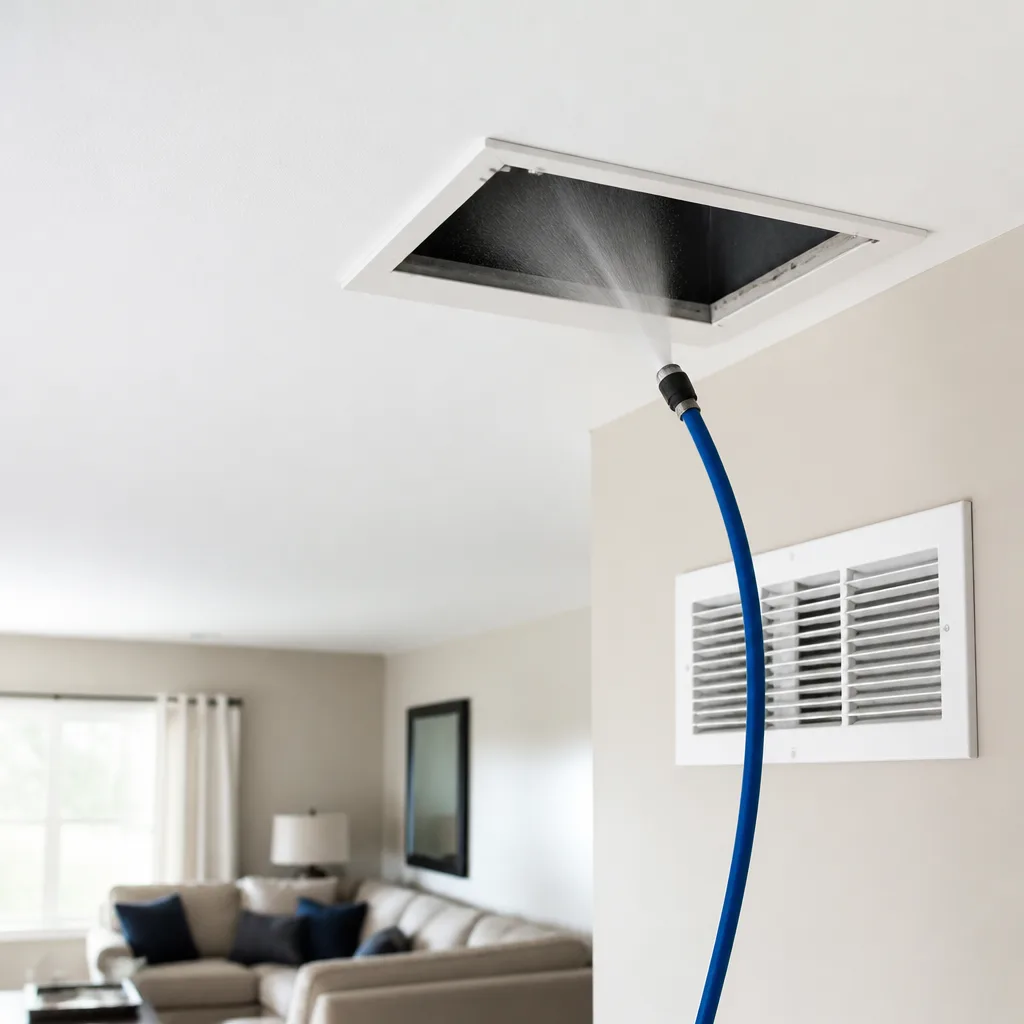 Sanitizing & deodorizing
Whole-system duct and dryer vent check with before-and-after photos - you see exactly what came out of your vents
That "$99 whole-house special" is a bait ad - the real number appears once they are in your hallway, or the "clean" is a shop-vac at the register. We photograph the inside of your ducts before and after instead.
DIY vs Professional Air Duct Cleaning: The Woodside Homeowner’s Decision Guide
A shop vac moves roughly 100 cubic feet of air per minute. A commercial negative air machine built for duct cleaning moves 2,000 to 8,000. That gap isn’t a matter of degree, it’s the difference between pulling debris out of a duct and stirring it around inside one. Most homeowners who decide to clean their own ducts are picturing the first outcome. What they usually get is the second: dust that was sitting quietly on the duct floor gets loosened, lifted, and blown into the rooms they were trying to protect. This guide explains the physics behind that, what you can genuinely do yourself, when a Woodside home needs a professional, and how to judge whether the investment pays back. By the end you’ll know which side of the line your own house sits on.
Quick Answer
Professional air duct cleaning is worth it when your ducts hold real contamination: after renovation, after moisture intrusion, when you can see growth inside the system, or when the ducts haven’t been cleaned in over five years. DIY is worth it only for the surface work – register cleaning, filter changes, grille vacuuming, and visual checks. A consumer vacuum cannot generate the negative pressure needed to remove debris from inside a duct run, so attempts to “clean” the ducts themselves usually redistribute contamination rather than extract it.
Styles & brands we work with
- Whole-home duct cleaning
- Dryer vent cleaning
- Camera inspection
- Sanitizing & deodorizing
Table of Contents
- Why Airflow Physics Decides the DIY Question
- What You Can Legitimately Do Yourself
- Why Older Woodside Homes Change the Risk
- When Professional Service Is Non-Negotiable
- How to Judge the ROI of Professional Cleaning
- How to Evaluate a Duct Cleaning Quote
- What a Professional Job Actually Involves
- Common Mistakes to Avoid
Why Airflow Physics Decides the DIY Question
Duct cleaning is not about reaching into a duct and scrubbing. It’s about establishing a pressure differential across the entire system, so that once contamination is dislodged, it has only one direction to travel: out, into a contained vacuum, and away from the living space. Get that backwards and you’ve made the problem worse.
Source removal, the industry term for actually taking contaminants out of the system, depends on three things happening at once. First, negative pressure strong enough to overcome the friction of a long duct run. Second, agitation at the duct walls, because dust doesn’t sit in a loose pile in the middle, it clings to seams, joints, and the liner. Third, containment at the point where the system is opened, so nothing escapes into the room while you work.
Picture what happens with a shop vac at a floor register. The hose pulls air from the nearest open path, which is the room you’re standing in. The pressure drop across a 20-foot duct run is negligible at 100 CFM. Dust that was bonded to the duct wall stays bonded, and any that does come loose settles a few feet downstream as soon as the vacuum is switched off. Then the furnace kicks on and blows it into the kitchen.
This is why professional setups look the way they do. An Air Duct Cleaning Woodside job runs on Rotobrush and Nikro duct cleaning systems, paired with Abatement Technologies negative-air and HEPA containment equipment – the same category of tools used in remediation work. Those machines pull thousands of CFM through a sealed system, and the containment unit holds what comes out instead of venting it into your hallway. The difference between that and a wet/dry vac isn’t a marketing distinction. It’s the entire point of the service.
What You Can Legitimately Do Yourself
There’s a real list of homeowner tasks that genuinely help indoor air quality, and it’s worth separating them clearly from the ones that don’t. Doing the first four well can meaningfully reduce the load on your system. Doing them badly, or substituting them for actual duct cleaning, wastes your time.
The tasks worth doing yourself
- Change the filter on schedule. A clogged filter chokes airflow, drives up runtime on the blower, and lets more dust settle in the ducts. Match the filter rating to what your system was designed for; higher MERV isn’t automatically better if the blower can’t handle the restriction.
- Vacuum the return grilles. The face of a return grille collects dust the way a screen door collects pollen. A brush attachment and five minutes per grille keeps that layer from getting pulled into the system.
- Wipe supply registers. The louvers and the immediate rim collect dust, especially in rooms with carpet. This is surface cleaning, not duct cleaning, but it’s the dust you actually see.
- Do a visual inspection. Flashlight and a phone camera. Pull a register and look inside. You’re checking for visible dust buildup, dark staining, moisture, or a liner that’s peeling. What you see tells you whether the next item on this list is a phone call.
What you can’t do yourself
The ducts behind the walls, the trunk lines in the basement or crawlspace, the plenum at the air handler, and the interior surfaces of flex runs all need equipment you don’t have in a garage. Brush kits sold for homeowner use have their place for the last few feet near a register, but they cannot establish system-wide pressure, and running a brush through a flex duct by hand is one of the more reliable ways to tear a liner. The air inside your home deserves the same standard as the air in a hospital, and that standard starts with equipment sized for the job.
Why Older Woodside Homes Change the Risk
Woodside has a housing stock that spans a wide range of eras, and the ductwork inside those homes varies just as much. Many houses in the neighborhood have had HVAC systems replaced, extended, or re-routed over the years, which means a single home can contain several different duct types spliced together. That matters enormously when you’re deciding whether to attempt the work yourself.
- Flex duct with a deteriorating liner. The inner liner of older flex duct can develop pinholes, flaking, or full separation from the outer jacket. Any agitation from a brush, hand-driven or powered, can shred what’s left of it. Once the liner fails, the duct is delivering attic air instead of conditioned air.
- Aging taped or mastic joints. Joints that were sealed years ago may have dried out and separated. Disturbing the system can open leaks that were previously held together by dust and inertia. Those leaks pull unconditioned air from wall cavities directly into the supply stream.
- Contamination beyond arm’s reach. A long trunk run in a Woodside home can carry debris twenty or thirty feet from the nearest register. No homeowner tool reaches that far with meaningful suction, and a longer hose on a shop vac doesn’t change the pressure math.
- Displacement into the living space. In a tightly built house, disturbing dust without containment pushes it into the rooms through every gap in the system. That’s the opposite of what you set out to do.
We’ve seen the pattern often enough to say it plainly: in older Woodside homes, a DIY attempt on the ducts themselves carries a real chance of liner damage, opened joints, or a dust event that takes days to settle. Register cleaning and filter changes are safe. Anything involving pressure inside the system is not.
When Professional Service Is Non-Negotiable
Some conditions put a home past the point where the DIY question is even worth debating. If any of the following applies, the work needs professional equipment and containment regardless of what it costs, because the alternative is a system that stays contaminated or gets damaged.
- Post-renovation. Drywall dust, sawdust, and construction debris are fine enough to travel through the entire system and settle everywhere. Renovation dust is one of the most common reasons ducts need cleaning, and it’s the debris most likely to clog a blower or coat a coil.
- Confirmed moisture intrusion. Water in a duct system, whether from a leak, a flooding event, or condensation, creates conditions for biological growth. Cleaning without addressing the moisture source and then treating the system leaves the problem to return.
- Visible microbial growth. If you can see dark staining or growth inside a register or on the plenum, stop and call. This is not a bristle-brush situation.
- No cleaning in over five years. Debris accumulates steadily, and after five-plus years in a Woodside home the buildup is usually deep enough in the runs that surface tools won’t touch it.
As part of our air duct cleaning work, we pair the extraction step with sanitizing treatments, including Guardsman-brand protective applications, so the system isn’t just cleared but treated. When the ducts themselves need repair – failed seals, damaged liner, disconnected sections – we handle that through duct repair and sealing as a separate scope, because cleaning a system with broken joints just re-contaminates it.
How to Judge the ROI of Professional Cleaning
The wrong way to think about duct cleaning ROI is to compare the cleaning fee against the cost of a shop vac. The right way is to look at what a contaminated system costs you every month it runs: restricted airflow, a harder-working blower, filters that load up fast, and dust that keeps settling on every surface in the house. Those costs are steady and mostly invisible.
The three places the return shows up
- System efficiency. A duct system clogged with debris or leaking at the joints makes the blower work harder for the same delivered air. Clearing the system and sealing the leaks means the equipment moves conditioned air the way it was designed to.
- Filter longevity. Homeowners who clean their ducts often notice their filters stay cleaner longer afterward. That’s because less debris is circulating into the filter from inside the system. The filter is downstream of the ducts, so what’s in the ducts ends up on the filter.
- Reduced HVAC maintenance. A blower and a coil that aren’t coated in dust last longer and need fewer service calls. Debris that reaches the evaporator coil turns into a matted layer that reduces capacity and eventually requires a proper coil cleaning.
There’s a fourth return that’s harder to price but matters on a Woodside property: tenant satisfaction. Property managers who keep ducts clean hear fewer complaints about dust and odors, and units turn over more cleanly. That’s why we work with residential and property management customers alike.
If you’re also looking at the bigger picture of system maintenance, HVAC cleaning covers the components beyond the ducts – the blower, the coil, the cabinet – and pairs naturally with a duct cleaning to keep the whole system on the same schedule. We also run dryer vent cleaning as its own service, since a clogged dryer vent is a leading household fire risk that most duct cleaners skip entirely.
How to Evaluate a Duct Cleaning Quote
The duct cleaning industry has a reputation problem, and it’s earned. The pattern is familiar: a low advertised price, then a technician on site who “discovers” problems and presents a much larger bill. The way out of that pattern is to know what a fair quote looks like before anyone arrives.
What a credible quote includes
- A whole-system price, not a per-vent price. Per-vent pricing encourages the company to count vents aggressively and gives you no ceiling on the final bill. Ask for one flat price for the system you have.
- The equipment names. A professional operation can tell you what machines they’ll use. Rotobrush and Nikro are industry-standard names. If the answer is vague, ask again.
- A stated containment method. How will they keep dust out of your living room while they work? Abatement Technologies negative-air equipment and HEPA containment are the professional answer.
- Before-and-after documentation. The best proof that work was actually done is photos of your own ducts, taken inside, before and after. Insist on seeing them.
- A written scope that matches the price. The written estimate sets the final price. It should list exactly what’s included: how many returns and supplies, whether sanitizing is included, whether any repair is flagged.
Red flags
- Advertised prices that are dramatically below the rest of the market – something has to give once they’re inside the house.
- Any pressure to “clean the whole system today or lose the price.”
- No mention of containment or equipment.
- A quote given without anyone walking the system or counting the duct runs.
We’ve built our whole approach around the opposite of that pattern: one flat price per system, agreed before work starts, with the written estimate as the final word. From cleaning to sealing to sanitizing, the scope is set in writing first.
What a Professional Job Actually Involves
Knowing the sequence helps you judge a quote and helps you spot a job that isn’t being done properly. Here’s what a real duct cleaning job looks like from start to finish.
- System walkthrough and pressure setup. The technician walks the system, identifies trunk and branch runs, and sets up the negative-air machine with containment at the appropriate opening. Sealing the supply and return openings happens before any agitation.
- Agitation and extraction. Using a Rotobrush or Nikro system, the duct walls get agitated while the negative pressure pulls loosened contamination out to the containment unit. The order matters: agitate with pressure already established, and the debris goes one direction.
- The blower, coil, and plenum. The components at the air handler get cleaned as part of the HVAC cleaning scope, or as an add-on if not already included.
- Sanitizing. A Guardsman-brand protective treatment or similar antimicrobial application is applied inside the system once the ducts are clean, to address what cleaning alone doesn’t reach.
- Duct repair and sealing. Any failed joints or damaged liner found during the cleaning get addressed through duct repair and sealing, so the system you just cleaned stays sealed.
- Verification. The technician photographs the interior before and after – your own ducts, not stock photos – and provides that documentation.
A clean installation into a full air quality ecosystem doesn’t stop at the ductwork. Honeywell and Aprilaire systems handle filtration and humidity control, and closing that loop alongside dryer vent cleaning means the whole house is on the same schedule instead of getting piecemeal attention.
Common Mistakes to Avoid
- Using a shop vac on a live register. The vacuum pulls air from the room, not the duct. Whatever it dislodges drifts back into the room the moment the system runs.
- Running a brush through flex duct by hand. Flex liner is thin, and hand-driving a brush into it can tear it. Once torn, the duct pulls attic or wall cavity air into the supply stream.
- Cleaning ducts before a renovation is finished. Drywall dust keeps getting generated until the last sanding pass. Cleaning before that means cleaning twice.
- Ignoring a visible moisture source. Cleaning a wet system without fixing the leak can spread biological growth. The moisture has to be addressed first.
- Accepting a per-vent price. The final bill depends on how many vents the company counts, so you have no ceiling. Insist on a whole-system range before work starts.
- Neglecting the dryer vent. A clogged dryer vent is one of the leading causes of household fires, and it’s a different service from duct cleaning. It needs doing too – Woodside homes with long dryer runs especially.
- Believing low-advertised “special” pricing. A quote dramatically below the rest of the market usually means the real price arrives once the technician is inside. Ask for it in writing upfront.
See the difference
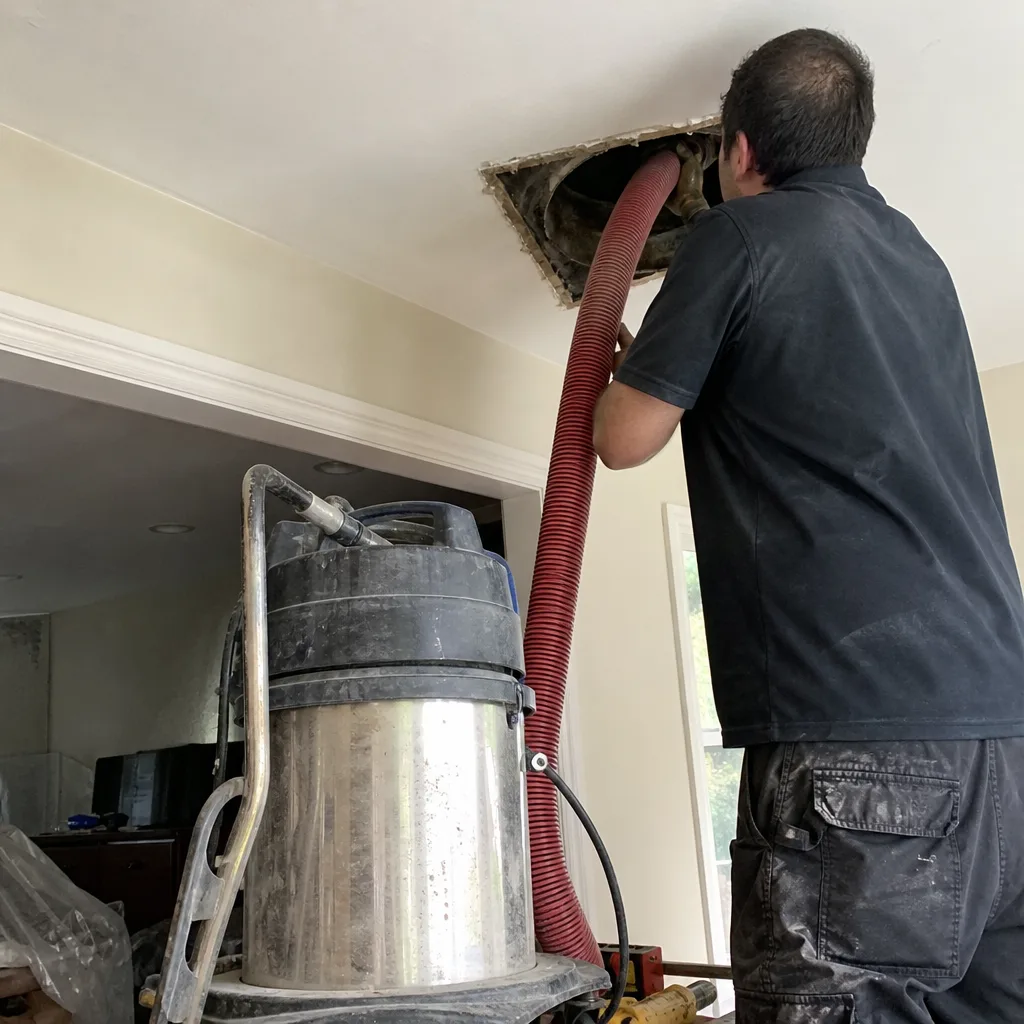 Before
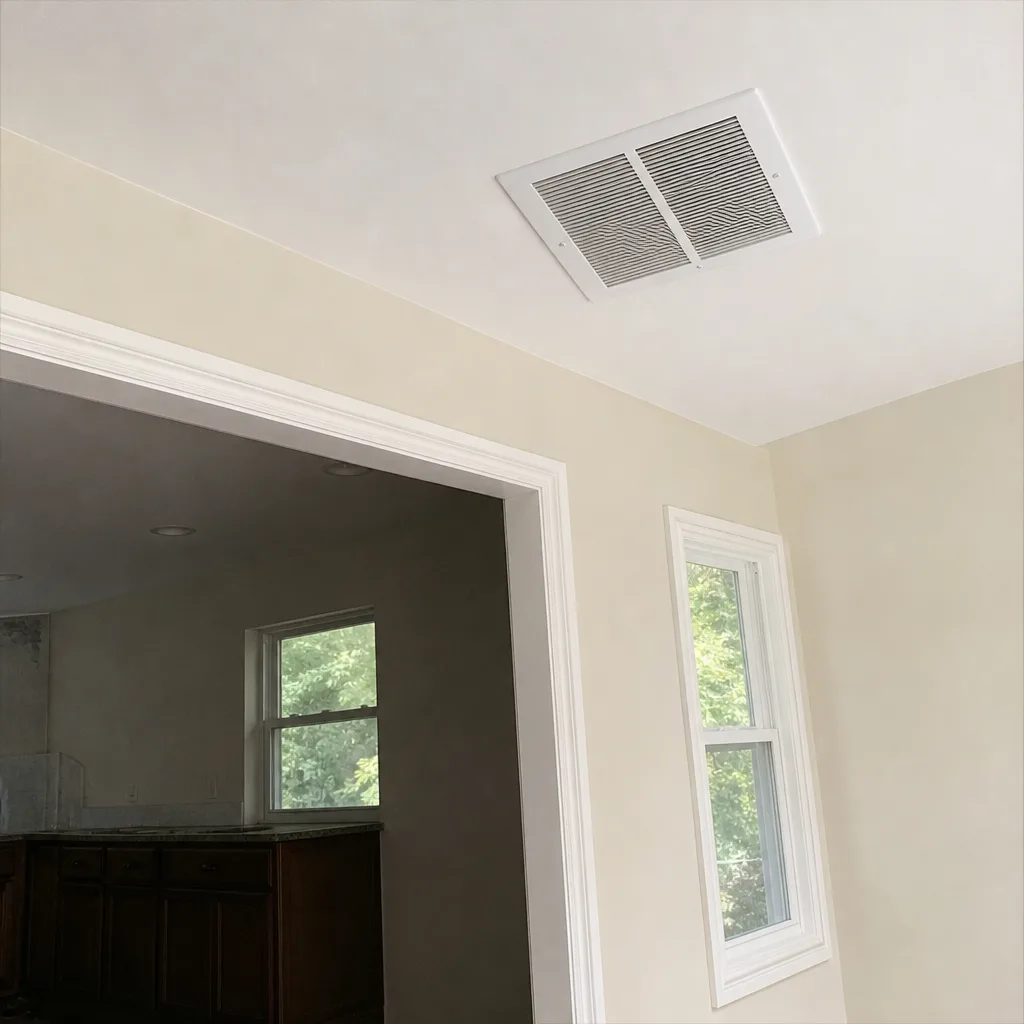 After
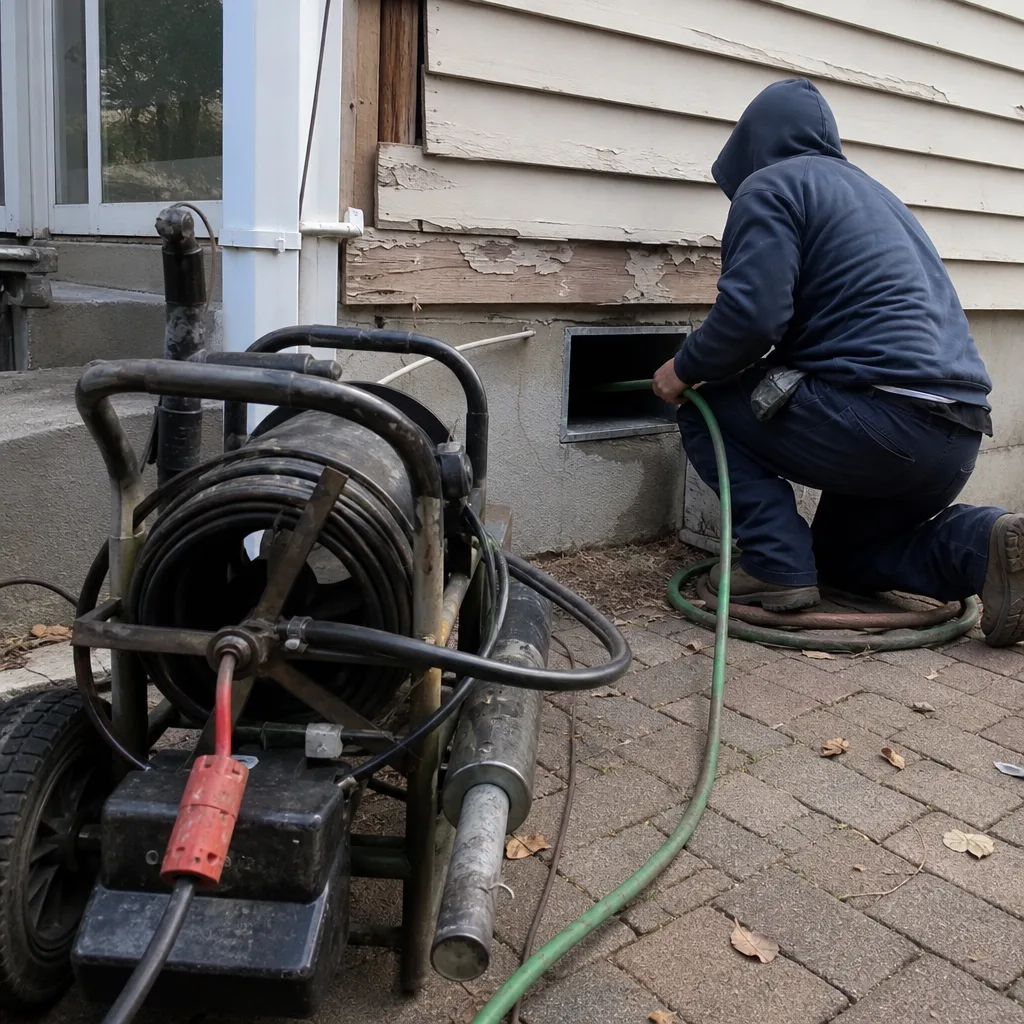 Before
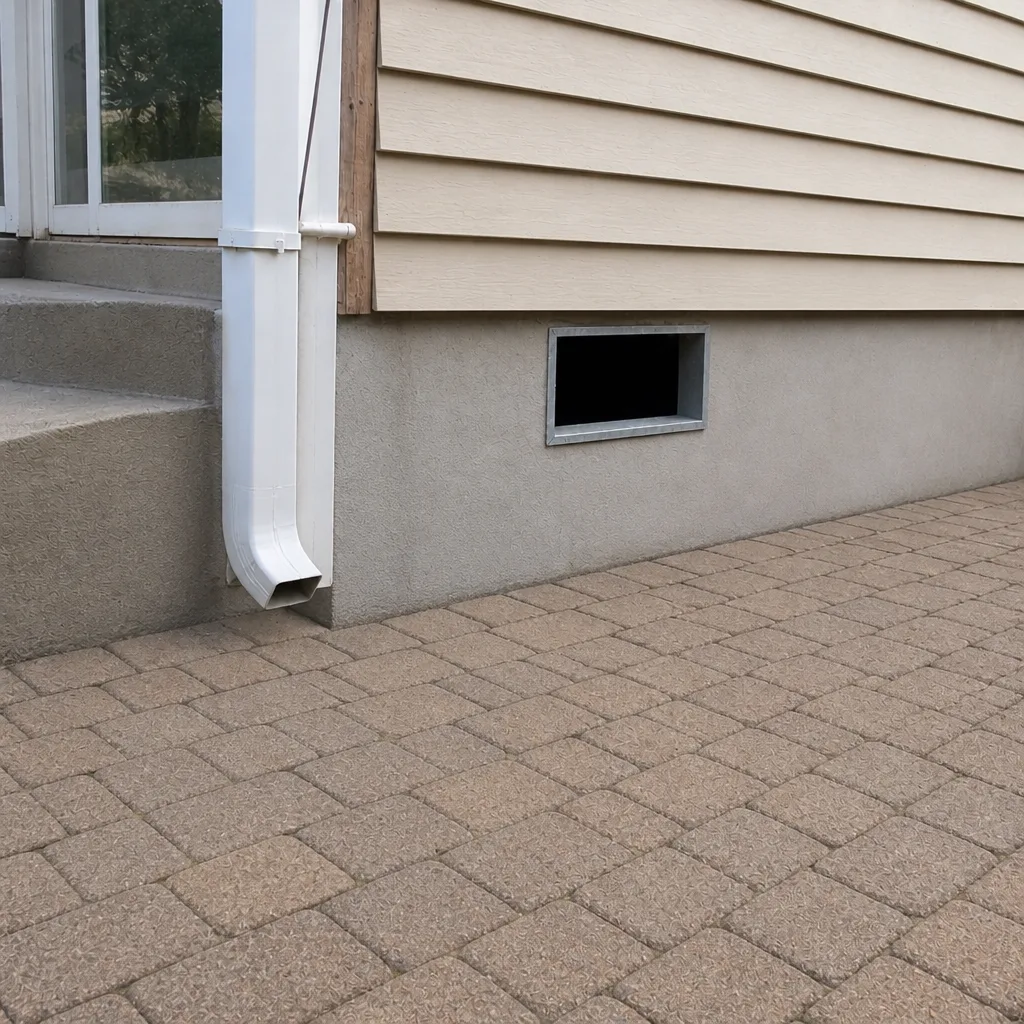 After
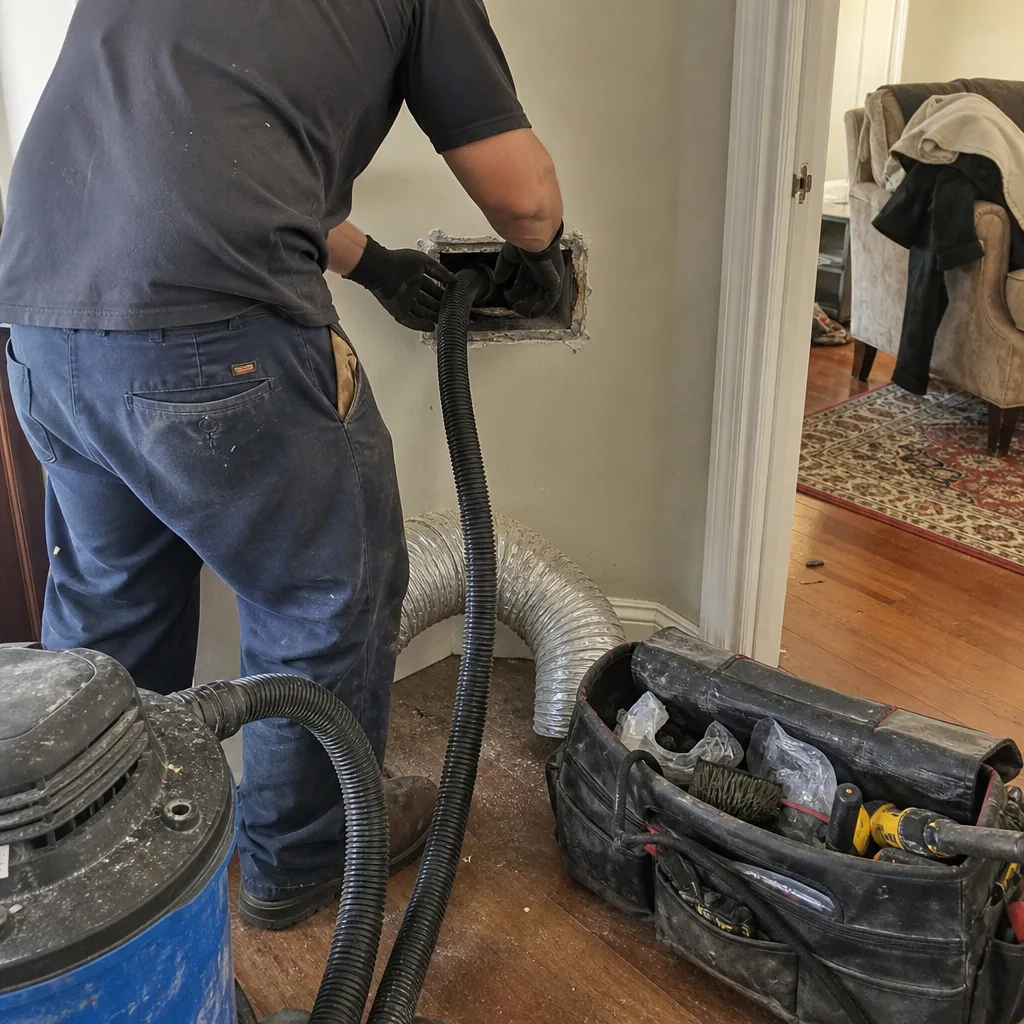 Before
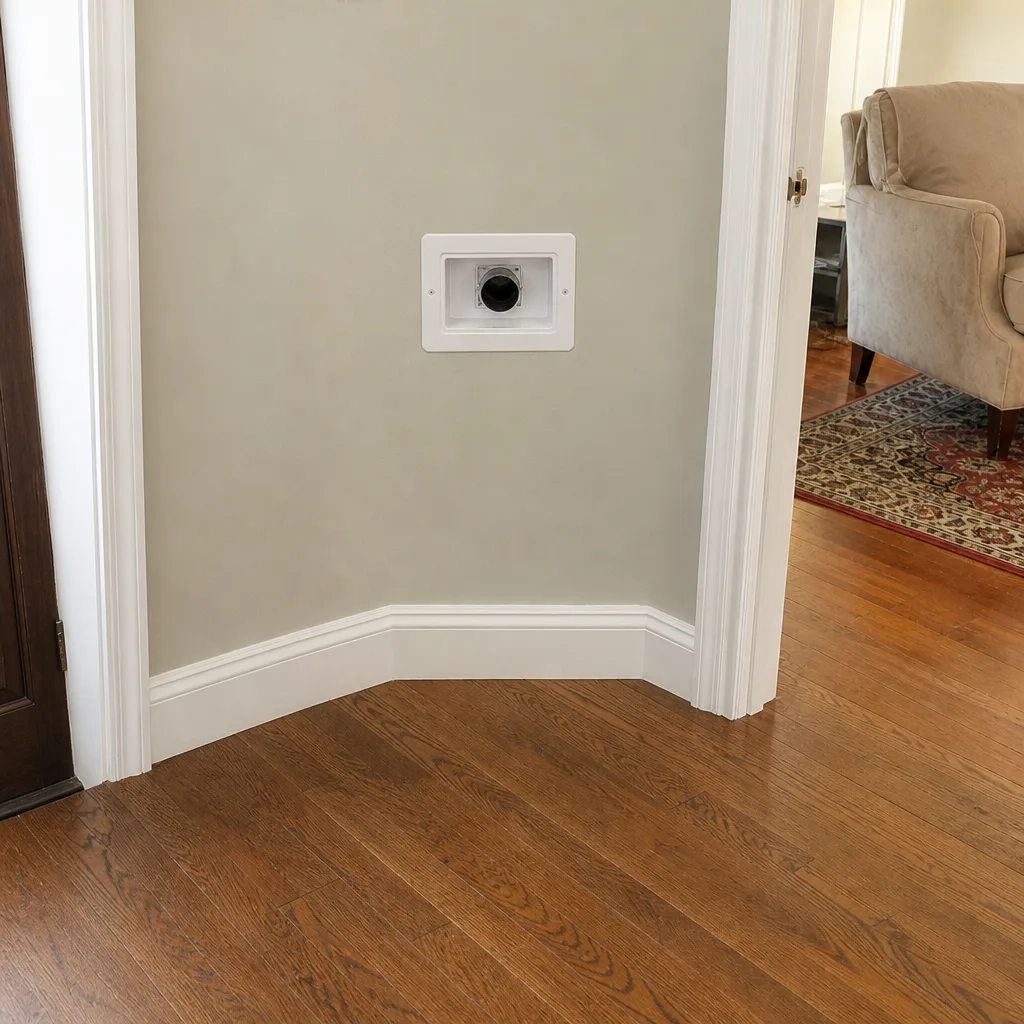 After
When to Call a Professional
Call a professional if any of the following describe your Woodside home: you’ve just finished a renovation or bought a home with unknown duct history; you’ve seen moisture or growth inside the system; your ducts haven’t been cleaned in over five years; your family is experiencing allergy symptoms indoors that improve when you’re away; your filter loads up in weeks rather than months; or your energy bills have crept up without an obvious cause. In each case, the cost of not cleaning outweighs the cost of cleaning, because the contamination is doing work on your system every hour it runs.
Air Duct Cleaning Woodside offers free estimates in Woodside. Our technicians have up to 9 years of experience, and we use professional-grade Rotobrush and Nikro systems with Abatement Technologies containment on every job. Call (877) 792-6795. We answer 24/7. Fast dispatch from 7am to 7pm, Sunday through Friday.
Frequently Asked Questions
Residential duct cleaning in Woodside is priced per system, not per vent, so the range depends on the number of runs and the condition of the ducts. The written estimate sets the final price, and we give you one flat price for the system agreed before any work starts. Call (877) 792-6795 for an exact quote. Estimates are free.
No. A shop vac generates roughly 100 CFM, which is not enough negative pressure to pull debris out of a duct run. What it does instead is loosen contamination and let it settle back into the system or drift into the room. Real extraction needs commercial negative-air equipment in the 2,000 to 8,000 CFM range with containment on the outflow.
Every five years is a reasonable general guideline for a typical household, but the real triggers are events rather than a calendar: renovation, a new home purchase, moisture intrusion, visible growth, or a family member with worsening indoor allergy symptoms. If you’re unsure, a visual inspection will tell you more than a schedule will. Call (877) 792-6795 and we’ll walk through it with you. Estimates are free.
The very low quotes usually come from per-vent pricing plus an upsell discovered once the technician is on site, which is how a modest advertised price grows into a much larger invoice. A whole-system quote, in writing, before work starts, is the way to protect yourself. Call (877) 792-6795 for a written estimate. Estimates are free.
Ask for before-and-after photos of your own ducts, taken inside the runs. A professional operation documents the work as a standard part of the job. Without photos, you have no way to verify what happened while the equipment was running. Call (877) 792-6795 to discuss what documentation we provide. Estimates are free.
Yes, if it hasn’t been done recently. Dryer vent cleaning is a separate service from duct cleaning, and a clogged vent is one of the leading household fire risks. Most duct cleaners skip or outsource it, which is why we run it as its own dedicated service. Call (877) 792-6795 to schedule. Estimates are free.
It can. Hand-driven brushes can tear the inner liner of flex duct, and agitation without containment can open aging taped joints. In older Woodside homes with spliced or re-routed ductwork, the risk of damaging the system is real. Register cleaning and filter changes are safe DIY tasks; agitation inside the ducts is not.
The Bottom Line
The DIY-or-professional question for duct cleaning comes down to physics. A consumer vacuum cannot move enough air to extract debris from a duct run, so an attempt to clean the ducts yourself tends to redistribute contamination rather than remove it. Surface cleaning – filters, grilles, register faces – is genuinely worth doing yourself and genuinely helps. Everything inside the system belongs to a professional with commercial equipment and containment. If your Woodside home has had a renovation, moisture intrusion, visible growth, or five-plus years since the last cleaning, the answer is settled: call a professional.
Ready to Get a Straight Answer on Your Ducts?
If you’ve read this far, you already know which side of the line your home is on. What you need next is a real estimate from someone who will put the scope in writing before the equipment comes out. Air Duct Cleaning Woodside handles the full chain – cleaning, sanitizing, duct repair and sealing, HVAC cleaning, and dryer vent cleaning – with professional-grade Rotobrush and Nikro systems and Abatement Technologies containment. One flat price per system, agreed before work starts, with before-and-after photos of your own ducts at the end. Call (877) 792-6795 for a free estimate. We answer 24/7. Fast dispatch from 7am to 7pm, Sunday through Friday.
Written by the team at Air Duct Cleaning Woodside.