
Last updated November 22, 2026
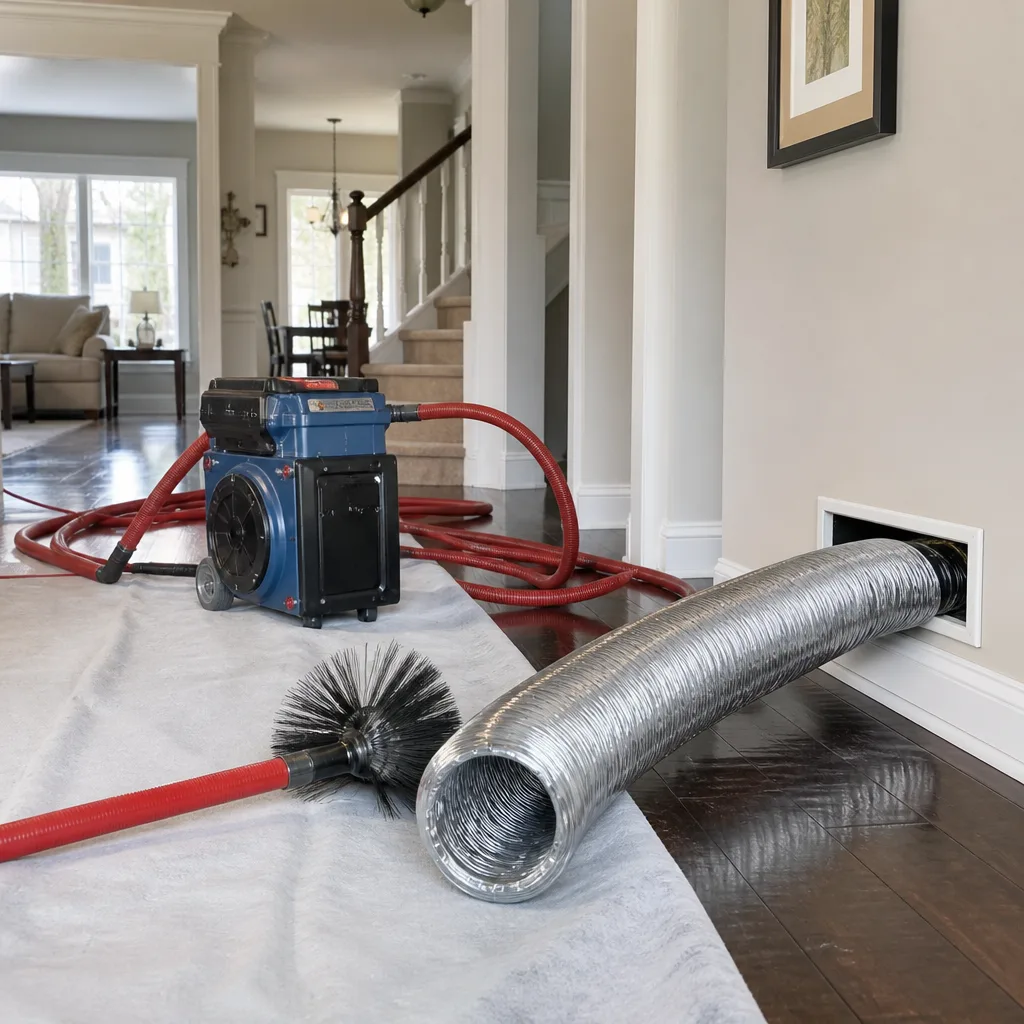 Whole-home duct cleaning
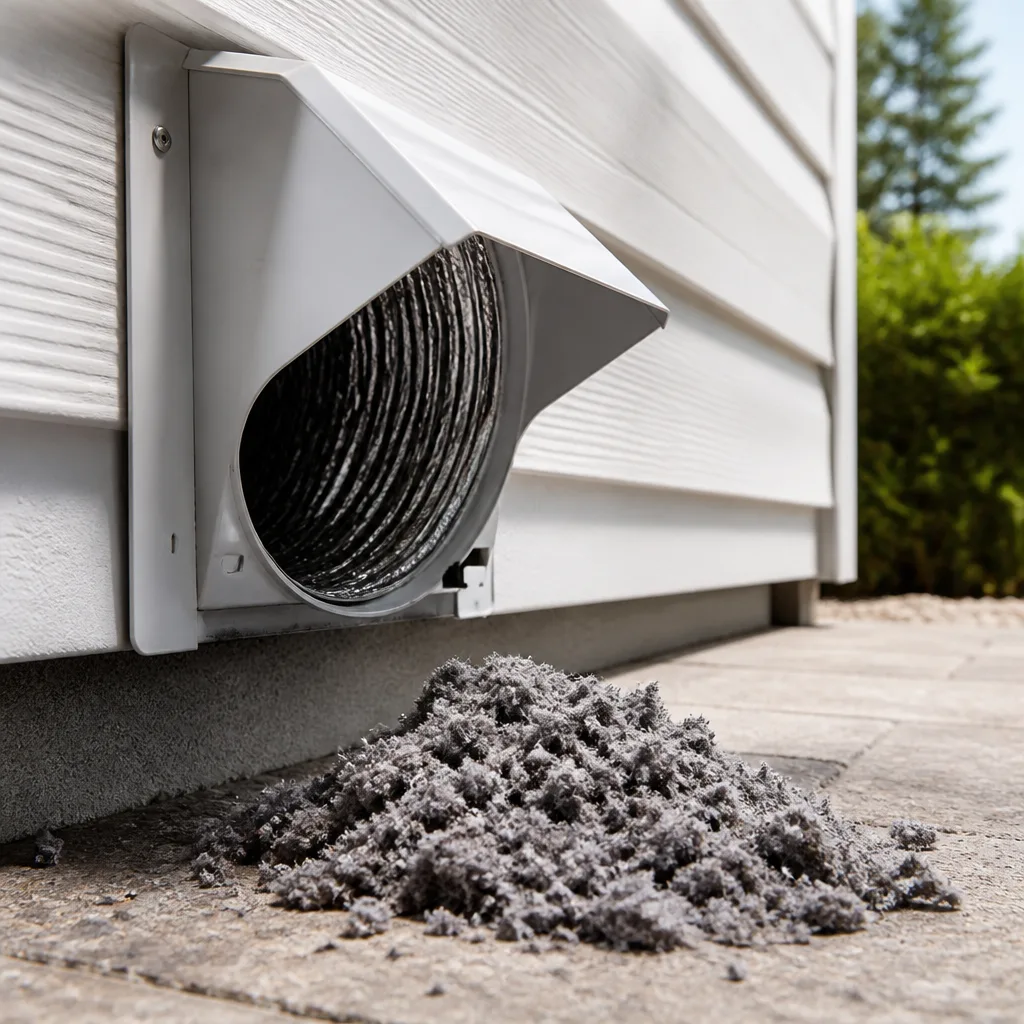 Dryer vent cleaning
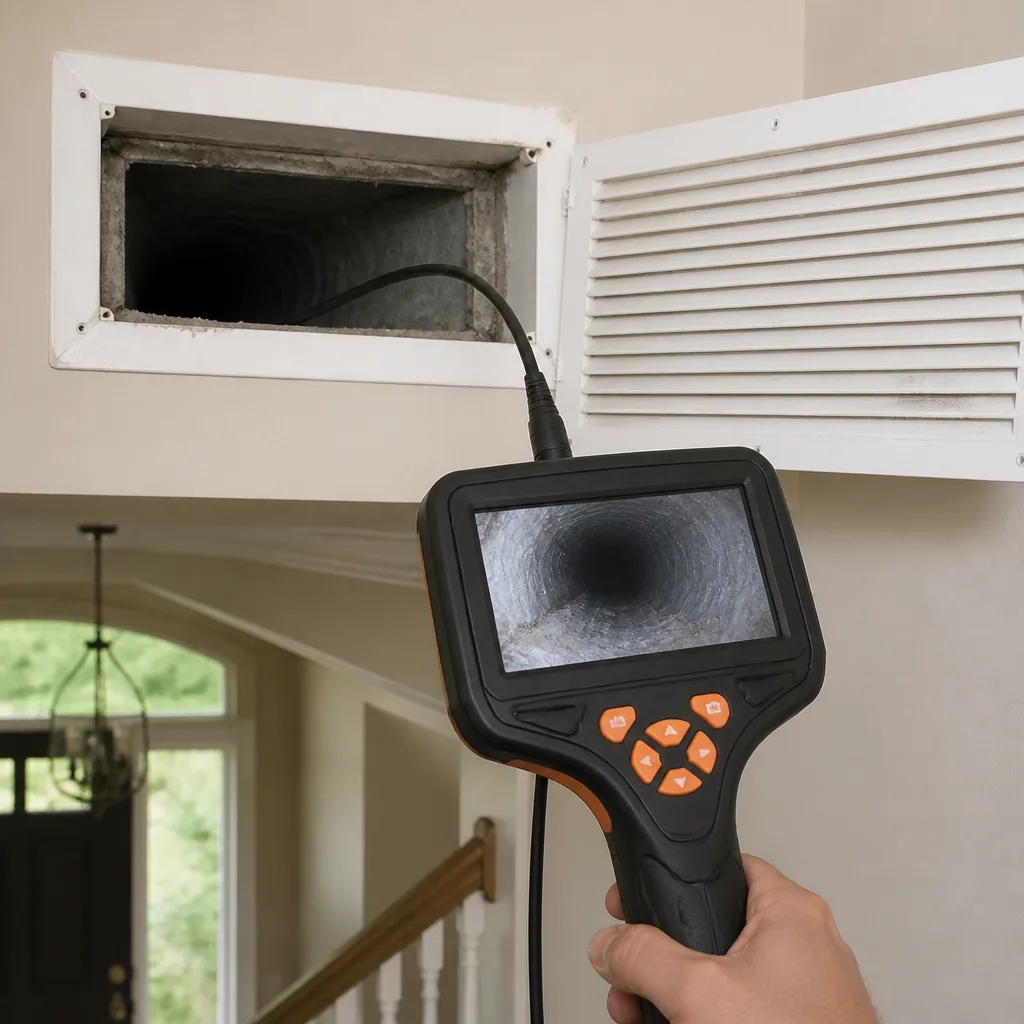 Camera inspection
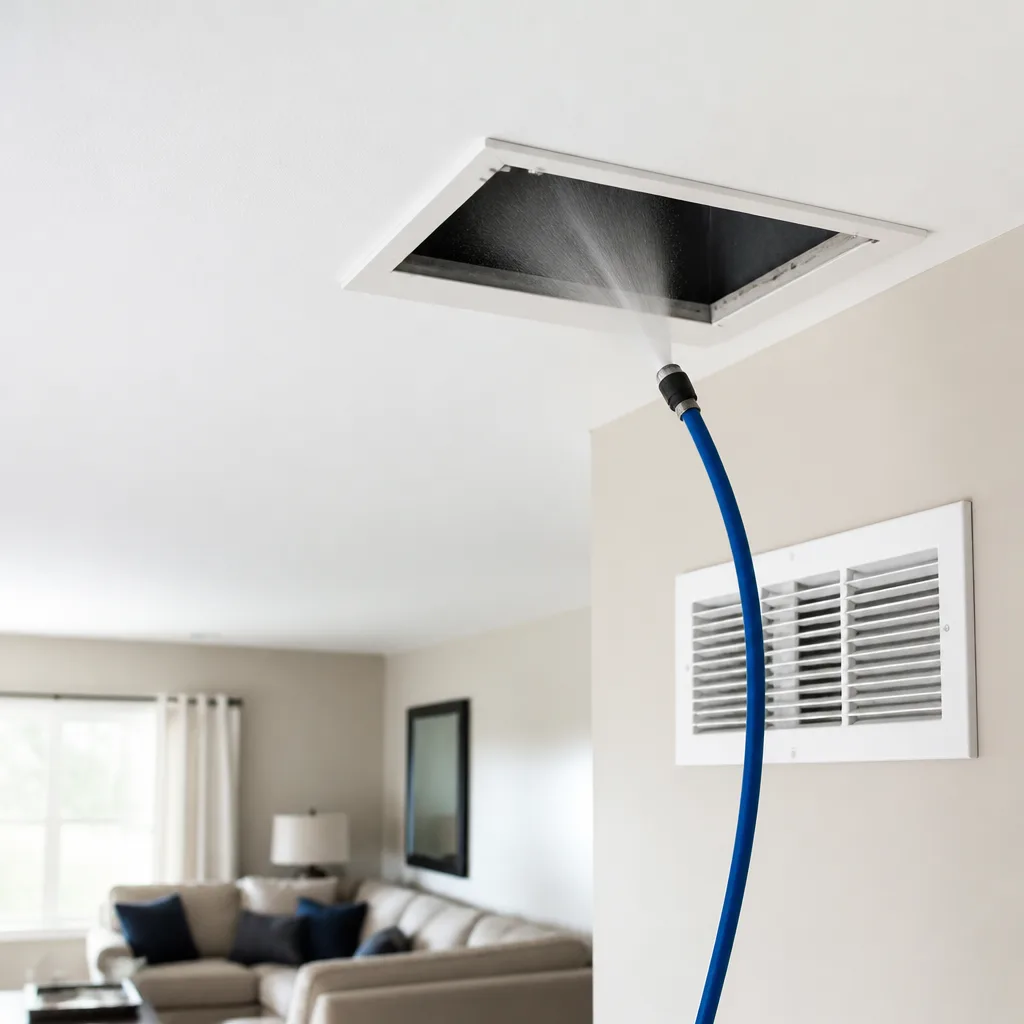 Sanitizing & deodorizing
Whole-system duct and dryer vent check with before-and-after photos - you see exactly what came out of your vents
That "$99 whole-house special" is a bait ad - the real number appears once they are in your hallway, or the "clean" is a shop-vac at the register. We photograph the inside of your ducts before and after instead.
Air Duct Cleaning Cost Breakdown: The Woodside Homeowner’s Reference for 2026
Most Woodside homeowners assume duct cleaning quotes cluster around the same number, give or take a hundred dollars. They don’t. In this market a legitimate whole-system cleaning can run anywhere from roughly $450 to well past $2,200 depending on the house, and the spread isn’t random pricing noise. It reflects real differences in equipment, labor hours, and how much of the system gets touched. A proper negative-pressure cleaning on a typical Woodside attached house takes three to five hours with commercial equipment. A quote that implies the job wraps in under 90 minutes is describing a different service. This guide breaks down what actually drives the cost, how Woodside’s housing stock changes the math, and how to read a low bid for what it leaves out.
Quick Answer
Air duct cleaning in Woodside typically costs $450 to $900 for a co-op or small apartment system, $650 to $1,400 for an attached row house or two-family, and $1,100 to $2,200 for a detached single-family home with multiple zones. The biggest cost drivers are the number of supply and return runs, how many access points have to be cut, whether the air handler gets cleaned, and whether the job includes sanitizing or duct sealing. Every legitimate quote should be one flat price per system, agreed in writing before work starts, with before-and-after photos of your own ducts.
Styles & brands we work with
- Whole-home duct cleaning
- Dryer vent cleaning
- Camera inspection
- Sanitizing & deodorizing
Table of Contents
- What actually drives the cost: a line-item breakdown
- How Woodside’s housing types change the price
- 2026 cost ranges by home type and system size
- Legitimate add-ons vs. common upsell tactics
- How to use a competitor’s low quote as a diagnostic tool
- What a proper cleaning actually looks like, step by step
- Common mistakes to avoid
- Frequently asked questions
What Actually Drives the Cost: A Line-Item Breakdown
Duct cleaning isn’t priced by the hour like a plumbing call, and it isn’t priced by the vent like a floor-cleaning service. It’s priced as a project with several distinct components, and understanding each one is the fastest way to compare two quotes honestly. When you see a $299 special and a $1,400 estimate side by side, the gap almost always lives in one of the five categories below.
- Equipment mobilization: A professional setup means a truck-mounted or high-capacity negative-air machine, HEPA filtration, rotary brush systems like the Rotobrush or Nikro platforms, and containment barriers. Hauling and setting that up is a real cost. Consumer-grade vacuums and brush kits cost nothing to “mobilize” because they don’t capture what they loosen.
- Labor hours per access point: Every register that feeds a run has to be removed, cleaned, and reinstalled, and every run has to be brushed and vacuumed through. More access points means more time, and time is the single largest line on any legitimate invoice.
- Number of supply and return runs: A small apartment might have six runs. A detached Woodside house with a full basement and an attic system can have twenty or more, plus a trunk line that has to be worked corner to corner.
- Air handler cleaning: The blower compartment, evaporator coil face, and drain pan collect dust and biological growth that never leaves through the registers alone. Cleaning the air handler is a separate scope item, and it’s the one cheapest quotes skip most often.
- Post-job inspection documentation: Before-and-after photos of your actual ducts, a written summary of what was found, and a record of any access points cut and resealed. This is what lets you verify the work happened at all.
When we quote a job in Woodside, the number you get reflects every one of those items for your specific system, not an average. One flat price per system, agreed before work starts, is the standard we hold to. If a competitor’s quote is one flat fee but doesn’t mention the air handler or documentation, that’s not a bargain – it’s a different, smaller scope.
How Woodside’s Housing Types Change the Price
Woodside is not a subdivision of identical builds, and duct geometry follows the housing. A detached single-family home, an attached row house, and a co-op apartment have fundamentally different systems, access constraints, and labor times. Pricing them as if they were the same is where a lot of misquotes originate.
Detached single-family homes
These usually have the most ductwork: a full basement or crawlspace trunk, a branch system feeding the first floor, and often a second zone in the attic. Attic runs are slower because access is tighter and containment is trickier. If your detached Woodside home has original 1920s-to-1950s ductwork, some of it may be wrapped or boxed in, and a technician may need to cut new access panels to reach the inside of the trunk. That’s normal, and it’s one of the variables pushing a job toward the top of the range.
Attached row houses and two-families
Row houses in Woodside often share wall assemblies with neighbors, so containment matters more. A negative-air setup with HEPA filtration keeps dislodged dust inside the work zone instead of drifting into a shared stairwell or the unit next door. The duct runs themselves tend to be shorter, which trims labor time, but the two-family configuration sometimes means two separate systems under one roof, and that’s two separate cleanings.
Co-op and apartment systems
The smallest scope, usually a single air handler feeding a handful of runs through a compact layout. Access can be the limiting factor rather than run count – a unit where the air handler sits in a closet or above a bathroom ceiling needs careful containment so nothing migrates into the living space. These jobs land at the low end of the range, but only if the quote actually includes the air handler and not just the visible registers.
2026 Cost Ranges by Home Type and System Size
The figures below are typical estimates for Woodside systems in 2026, not fixed prices. The written estimate for your specific home sets the final number. Use these ranges to sanity-check any quote you receive, and to spot the ones that don’t add up.
- Co-op or small apartment, single system: $450 to $900. Low end for a compact system with easy air handler access; high end when access panels have to be cut or sanitizing is included.
- Attached row house, single system: $650 to $1,400. Higher when the trunk line is boxed in or containment has to protect a shared stairwell.
- Two-family, two systems: $1,100 to $2,000. Two air handlers, two sets of runs, two sets of documentation.
- Detached single-family, single zone: $850 to $1,600. Attic runs and original-era ductwork push this upward.
- Detached single-family, multiple zones: $1,100 to $2,200. Each additional zone adds an air handler and its runs.
- Sanitizing add-on (Guardsman treatment): priced as part of the job, typically adding several hundred dollars for a full-system application.
- Duct repair and sealing: quoted separately once the technician has identified the leaks; sealing is priced by the number of joints and runs involved.
The same run count can be priced differently across Woodside depending on whether the trunk is accessible, whether the system has ever been cleaned before, and whether the technician can reach every run without cutting new panels. Those are legitimate variables. Next-day-availability price drops and “we’ll figure it out on site” quotes are not.
Legitimate Add-Ons vs. Common Upsell Tactics
Add-on services are where a lot of duct cleaning invoices balloon, and most homeowners don’t know which ones are actually warranted. Here’s the honest breakdown of the three most common proposals, and when each one earns its place on the estimate.
Mold treatment and sanitizing
Sanitizing is legitimate when there’s a reason for it: visible biological growth on the coil or in the drain pan, persistent musty odors coming from the registers, or moisture problems that have been addressed at the source. A full-system application using a Guardsman-brand protective treatment is the standard approach – it cleans and leaves a residual rather than just masking an odor. What’s not legitimate is a technician declaring “there’s mold in your ducts” without showing you photos of it and without any moisture source having been fixed. If the moisture source is still active, sanitizing is a temporary fix, and no honest contractor will tell you otherwise.
Duct sealing
Sealing earns its place when the cleaning reveals leaks at joints, boots, or connections – usually discovered by smoke testing or visual inspection during the job. Sealed ducts improve delivery and reduce the dust pulled in from unconditioned spaces. It’s not something to add preemptively, and it’s not something a technician should quote before opening the system up.
UV light installation
A UV light in the air handler is worth considering when there’s chronic biological growth that keeps returning despite cleaning and the moisture source has been corrected. It’s not a substitute for cleaning, and it won’t fix a dust problem on its own. If a technician leads with UV light before the system has even been inspected, that’s a sales script, not an assessment.
The rule of thumb: any add-on should come with photos of the actual condition that justifies it, and the base cleaning should stand on its own as a complete job. If the add-on is doing the work the base price claimed to cover, the base price was never real.
How to Use a Competitor’s Low Quote as a Diagnostic Tool
A very low quote isn’t automatically a scam, but it is a question mark worth probing. The trick is to ask questions that force the quote to describe its own scope, which either confirms it’s a smaller job or exposes what’s missing. Here are the questions that do the work.
- “How many supply and return runs does that price cover?” If they can’t tell you, they haven’t looked at your system. If they can, compare that number to what your home actually has.
- “Is the air handler included?” A quote that covers only the registers and runs is a partial job. The air handler is where a lot of the dust lives.
- “What kind of equipment do you use?” If the answer is a portable shop vacuum and a brush on a pole, the “cleaning” is really a dust redistribution. Professional-grade systems like Rotobrush or Nikro and containment equipment from Abatement Technologies are what a real job requires.
- “Do you include before-and-after photos of my ducts?” Any scope that can’t be documented is scope you can’t verify.
- “Is this a flat price per system, or does it change once you’re on site?” A teaser price that becomes a bigger invoice once the equipment is in the door is the single most common bait-and-switch in this trade. Ask directly.
- “How long will the job take?” Three to five hours is normal for a real cleaning on a Woodside attached house. Ninety minutes is a red flag if the quote also claims to include the air handler and all runs.
Run those questions past two or three providers and the honest quotes will converge on a similar scope, even if the prices differ. The low outlier either reveals a genuinely smaller job or reveals what it’s leaving out. Either way, you’re now comparing like with like.
What a Proper Cleaning Actually Looks Like, Step by Step
Understanding the process is the best defense against a misquoted job, because it tells you what to expect to see when the technician arrives and what to ask about if you don’t see it. Here’s the sequence a legitimate whole-system cleaning follows.
- Inspection and access planning. Every register is examined, the air handler is located, and the technician identifies which runs need new access panels and where containment will be set up. This is where the quote gets confirmed against reality, and where a written estimate should either match or be adjusted before work starts – not after.
- Containment setup. Negative-air and HEPA containment, using equipment in the same category as remediation work, seals the work zone so dislodged contaminants don’t migrate into your living space. This is the step that separates a real cleaning from a “blow it around” job.
- Register removal and cleaning. Grilles and return covers come off, get cleaned, and the boots beneath them get brushed and vacuumed.
- Run-by-run agitation and extraction. A rotary brush system works each run while the negative-air machine draws loosened material out through the containment. Every supply run, every return run, and the trunk line.
- Air handler and coil face cleaning. The blower compartment, coil face, and drain pan are cleaned. This is the step that ensures the dust you just removed doesn’t get reintroduced on the first cycle.
- Sanitizing and optional treatment. If the inspection found a reason for it – biological growth, musty odor, moisture – a Guardsman-brand protective treatment is applied as part of the sanitizing step.
- Reassembly and documentation. Registers reinstalled, access panels resealed, and before-and-after photos of your own system provided along with a written summary.
If any of the five steps between containment and reassembly gets skipped, the price you paid was for less than you thought. When we carry out a job in Woodside, the workflow above is the standard we build the estimate around. We don’t quote it unless we intend to do all of it.
Two More Cost Variables Worth Understanding
The dryer vent
Duct cleaning and dryer vent cleaning are separate services, but they’re often quoted together because they share the same trip and the same diagnostic eye. Dryer vent cleaning is worth its own line on the estimate: a clogged dryer vent is a fire risk and a drying-time problem, and most duct cleaners either skip it or send it to a subcontractor. In Woodside’s older attached homes, dryer vents are frequently routed through long interior runs to an exterior wall, and those are exactly the runs that accumulate lint fastest. If it’s been more than a couple of years since yours was cleaned, it belongs on the estimate.
The full air quality chain
Duct cleaning is one step. Sanitizing, sealing, and maintaining the system long-term are the others, and pricing each separately lets you decide which ones you actually need. Air quality solutions from Honeywell and Aprilaire – humidifiers, filtration upgrades, and air cleaners – are the category of equipment found in hospitals, schools, and commercial buildings, and they’re the logical next step for a Woodside homeowner who’s already committed to clean ducts and wants the air to stay that way. None of it replaces cleaning. All of it works better once the system is clean.
See the difference
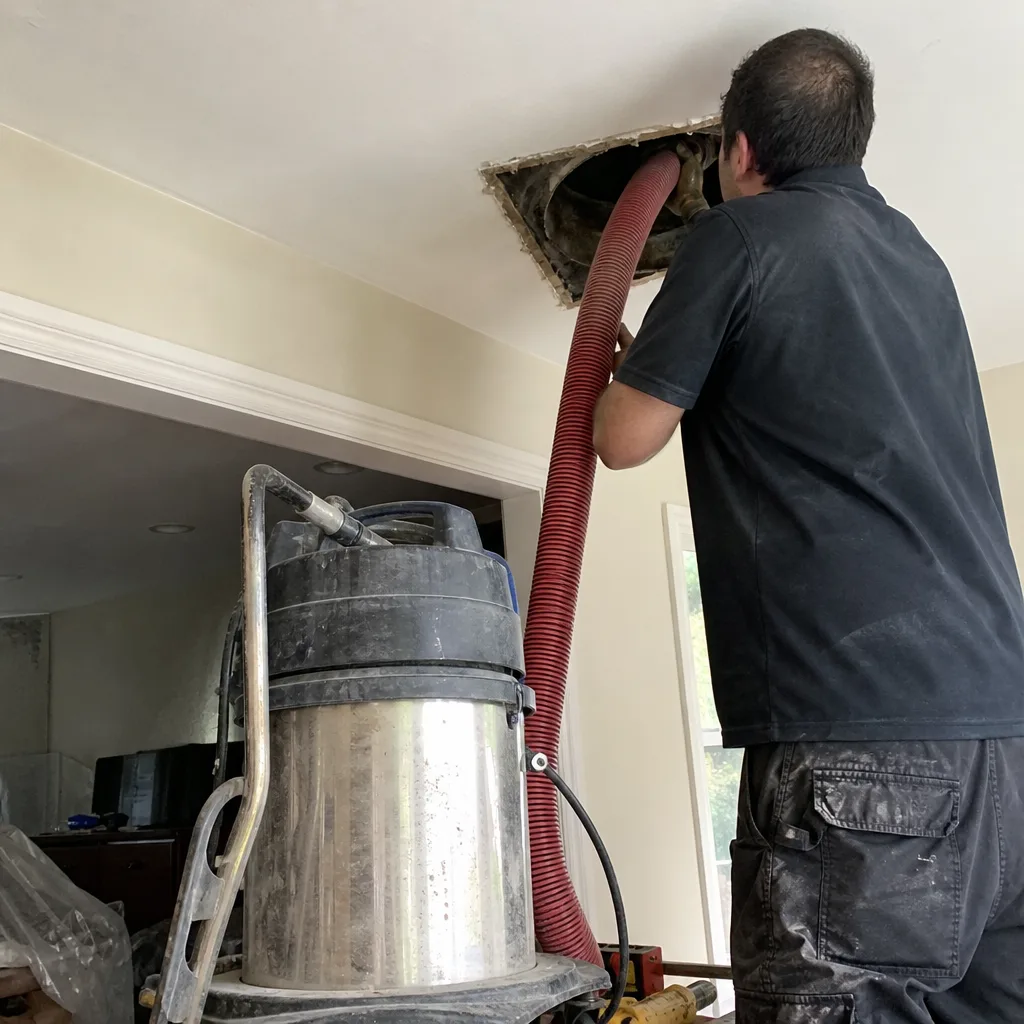 Before
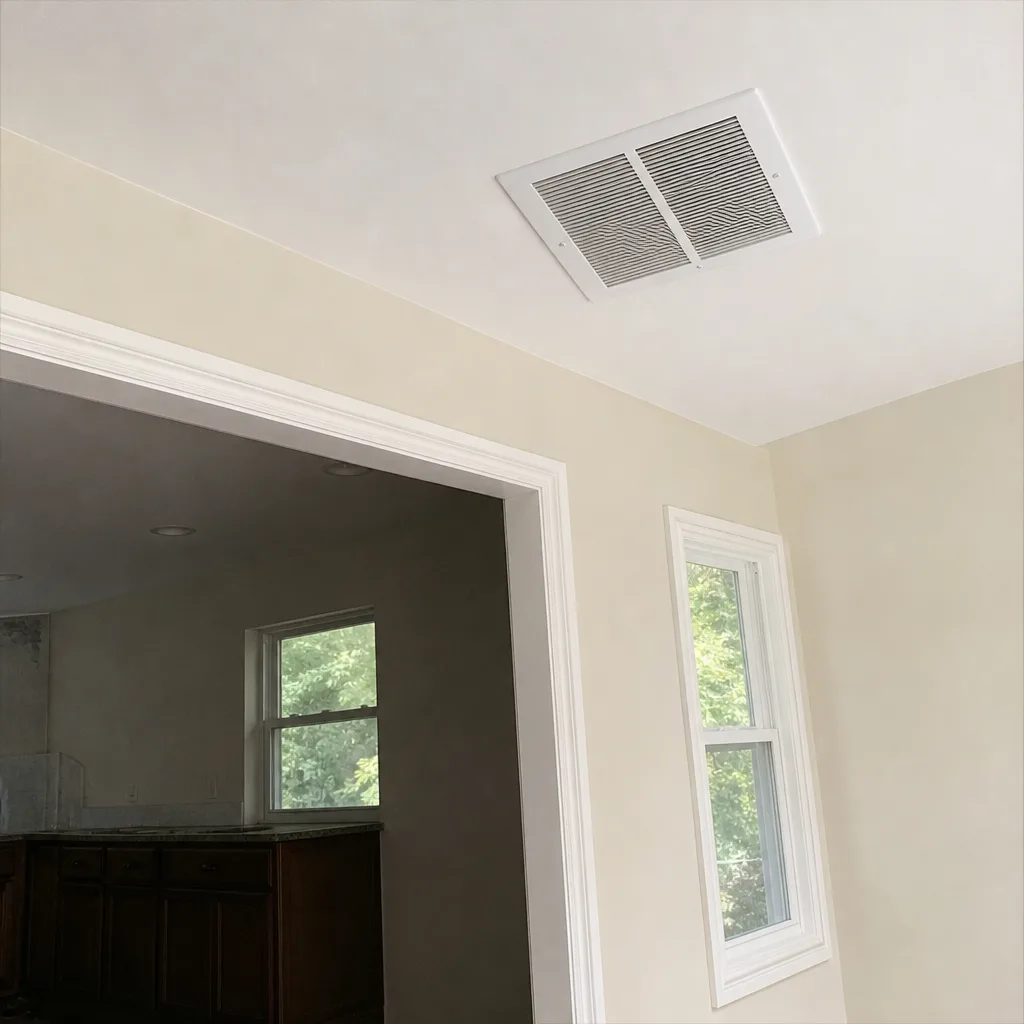 After
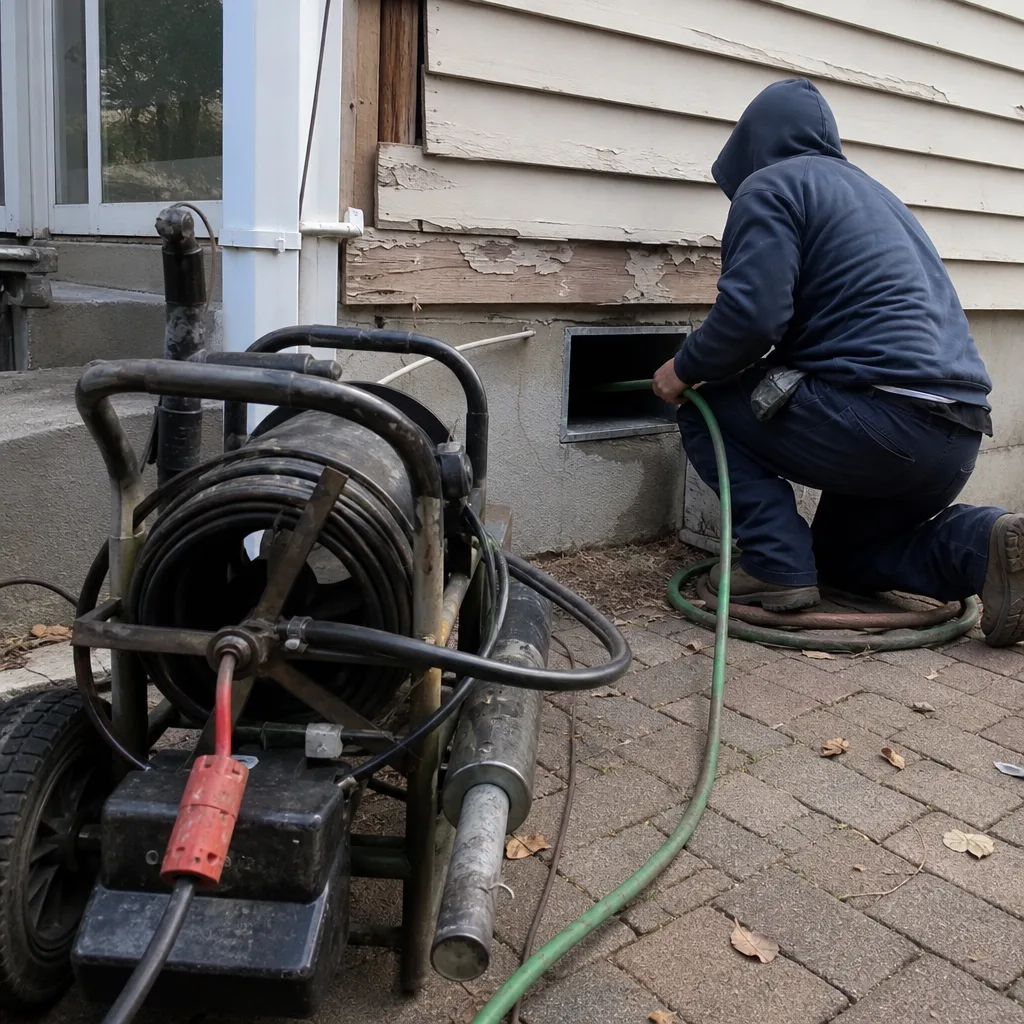 Before
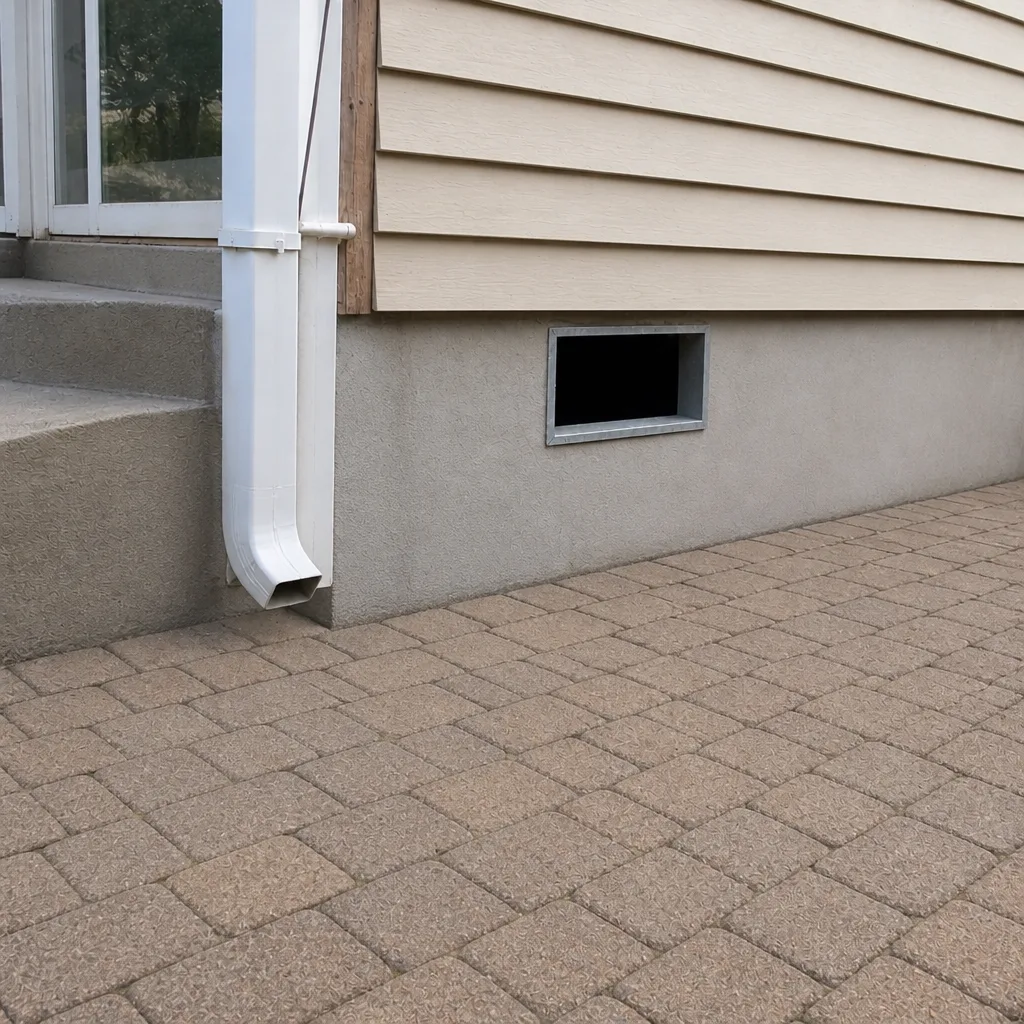 After
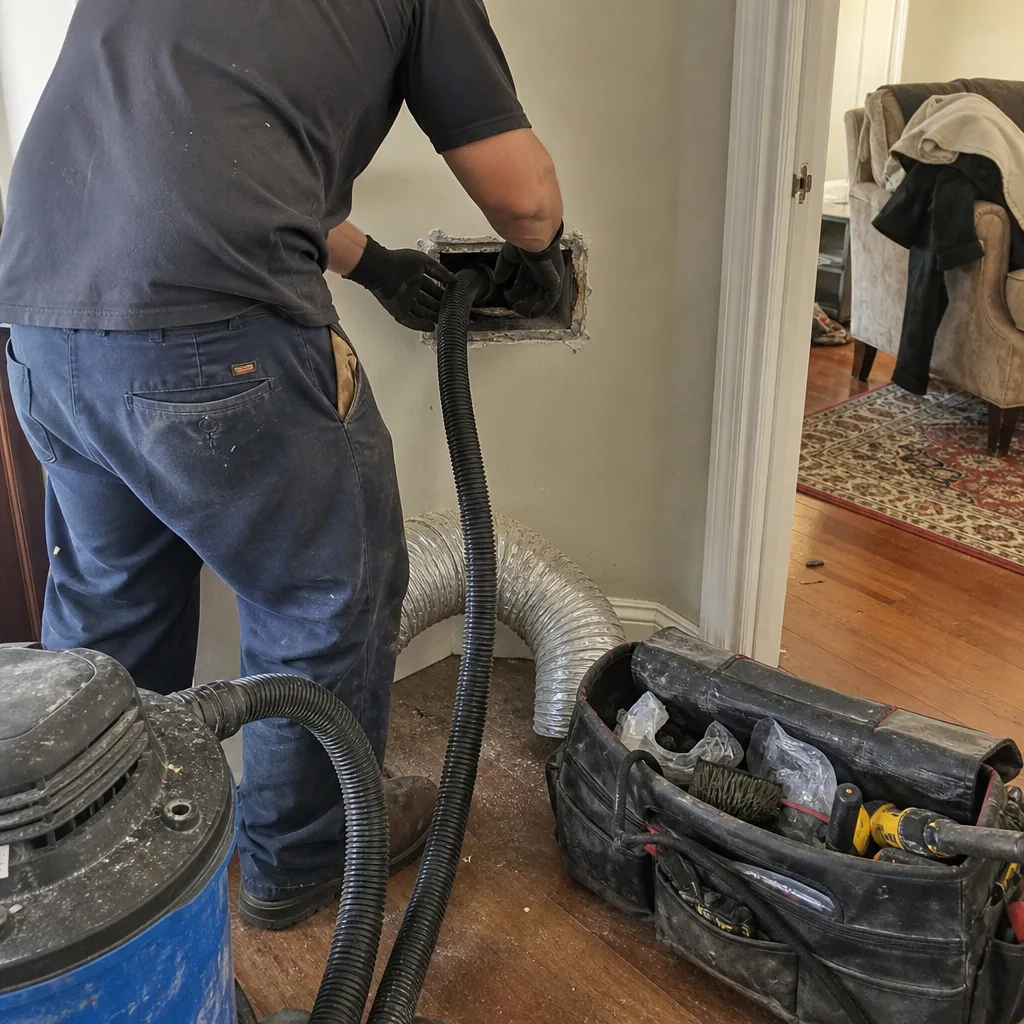 Before
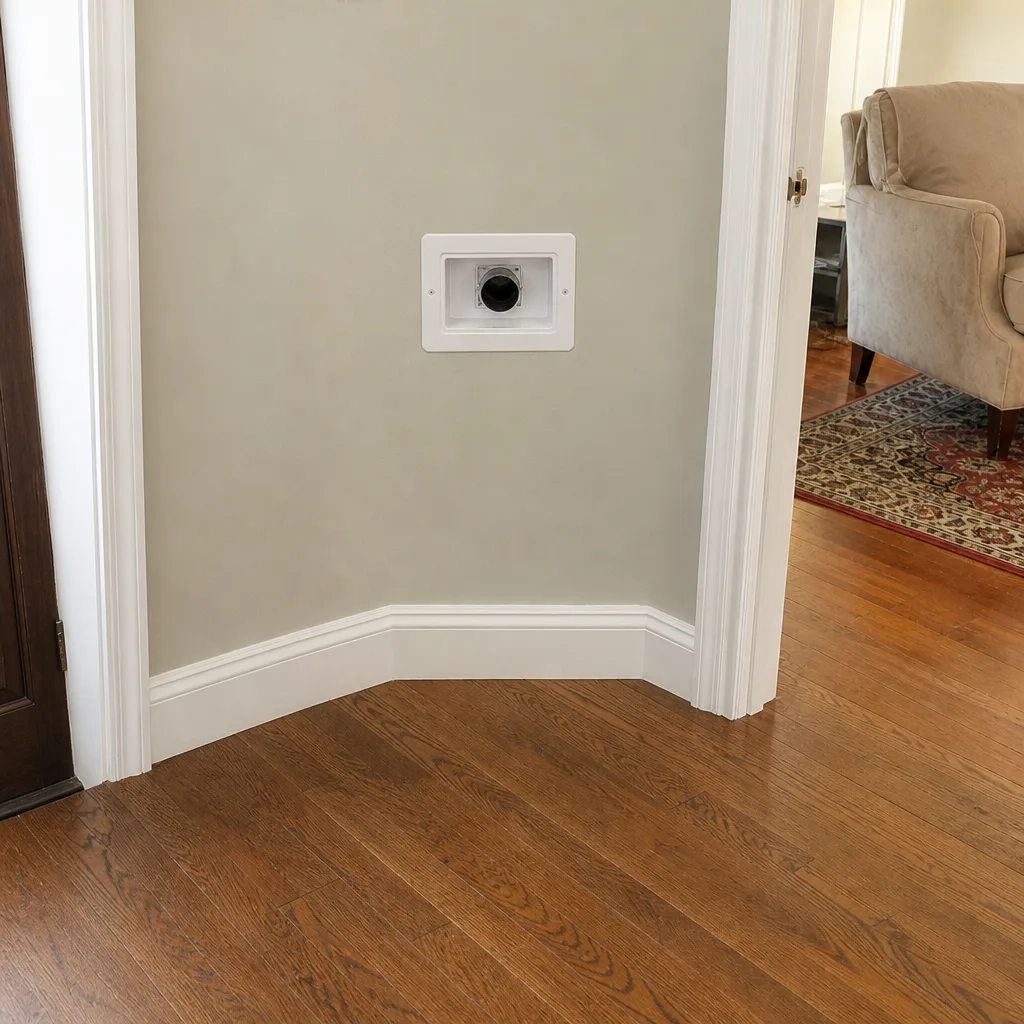 After
Common Mistakes to Avoid
- Choosing the lowest bid before understanding scope. A $150 quote and a $1,200 quote are rarely comparing the same job. Ask what each one covers before you compare prices.
- Assuming register-cleaning equals duct-cleaning. Cleaning the visible grilles and the boots beneath them is the easy 10% of the job. Ask specifically whether the runs and the air handler are included.
- Skipping the before-and-after photos. Woodside homeowners deserve documentation of the actual ducts in their own home, not stock photos from a brochure. Without photos, you have no way to verify the work was done.
- Adding sanitizing without fixing the moisture source. If a technician proposes mold treatment without addressing humidity or a leak, the treatment won’t hold. Fix the cause first.
- Forgetting the dryer vent. It’s a fire risk and an efficiency loss, frequently routed through long interior runs in Woodside’s older row houses, and it’s the item most duct cleaners leave off the estimate.
- Paying a teaser coupon price that grows on site. The invoice at the end of the job should match the written estimate you agreed to before work started. If it doesn’t, that’s the whole conversation.
- Believing one cleaning lasts forever. Duct cleaning isn’t a lifetime fix. If you want the air quality to hold, plan for ongoing maintenance rather than treating the job as one and done.
When to Call a Professional
Some signs are obvious – visible dust puffing out of a register when the system kicks on, musty odors drifting from the vents, a family member with allergies that flare up whenever the heat runs. Others are quieter: a recent move into a Woodside home with no record of the ducts ever being cleaned, a renovation that generated fine dust, or an aging HVAC system that’s been running hard without a look inside. If any of that sounds familiar, it’s worth having the system inspected and quoted. The cost of a proper cleaning is easy to compare against the cost of continuing to breathe what’s in the ducts. If you want the wider context on air duct cleaning and what the service actually covers, that’s a good place to start. Air Duct Cleaning Woodside offers free estimates in Woodside – call (877) 792-6795. We answer 24/7. Fast dispatch from 7am to 7pm, Sunday through Friday.
Frequently Asked Questions
Typical 2026 estimates run $450 to $900 for a co-op or apartment, $650 to $1,400 for an attached row house, and $1,100 to $2,200 for a detached single-family home with multiple zones. The final price depends on run count, air handler access, and whether sanitizing or sealing is included. Every legitimate quote is one flat price per system, agreed before work starts. Call (877) 792-6795 for an exact quote – estimates are free.
Cheap quotes are usually describing a smaller job: register cleaning only, no air handler, no containment, and no documentation. Sometimes they’re a teaser price that grows once the equipment is in the door. Ask what the price actually covers – runs, air handler, photos – and the difference between the two quotes will explain itself. Call (877) 792-6795 to walk through your system with us.
Before-and-after photos of your own ducts, plus a written summary of what was found and what was cleaned. Anyone with professional equipment can document the job. Anyone who can’t is asking you to take their word for it. We provide photos on every Woodside job as part of the standard scope. Call (877) 792-6795 if you’d like to see what that looks like before you book.
Every three to five years is the common guidance for a home with ordinary dust and no pets, and closer to every two to three years for households with allergies, pets, recent renovations, or a smoker. Woodside’s older attached homes, with their often-unsealed original ductwork, tend to pull in more dust from surrounding spaces and may need it a touch sooner. Call (877) 792-6795 and we’ll help you gauge what your system actually needs.
Yes, if the system has never been cleaned or there’s a dust, odor, or allergy problem. The job is smaller than a detached house, which brings the cost down, but the air handler still needs cleaning and the containment still needs to protect your living space – both of which a proper estimate should include. Call (877) 792-6795 to get a quote sized to your unit.
The air handler is included in our standard duct cleaning scope, and dryer vent cleaning is offered as a dedicated service alongside it. Together they cover the two biggest sources of household dust and fire risk that a general HVAC company rarely touches in the same visit. We also handle HVAC cleaning and duct repair and sealing when the inspection reveals leaks. Call (877) 792-6795 for a combined estimate.
The Bottom Line
Air duct cleaning in Woodside costs what it costs because of equipment, labor, and scope – and that scope is the only honest way to compare two quotes. A real cleaning takes three to five hours, uses professional-grade containment and rotary brush systems, covers every supply and return run plus the air handler, and documents itself with photos. A teaser price that skips any of that is a different job. Use the ranges here to sanity-check your quotes, use the questions to force scope disclosure, and hold every provider to one flat price per system agreed in writing before work starts. That’s the standard your ducts deserve.
If you’d like an estimate built around your actual system rather than an average, and you want to talk through what HVAC cleaning or dryer vent cleaning would add to the scope, we’re ready to help. From cleaning to sealing to sanitizing, we treat the whole chain as one project so nothing gets half-done. Professional-grade equipment, not consumer shortcuts. Your ducts. Your air. Done right. Call (877) 792-6795 for a free estimate. We answer 24/7. Fast dispatch from 7am to 7pm, Sunday through Friday. Air Duct Cleaning Woodside.
Written by the team at Air Duct Cleaning Woodside.