
Last updated November 22, 2026
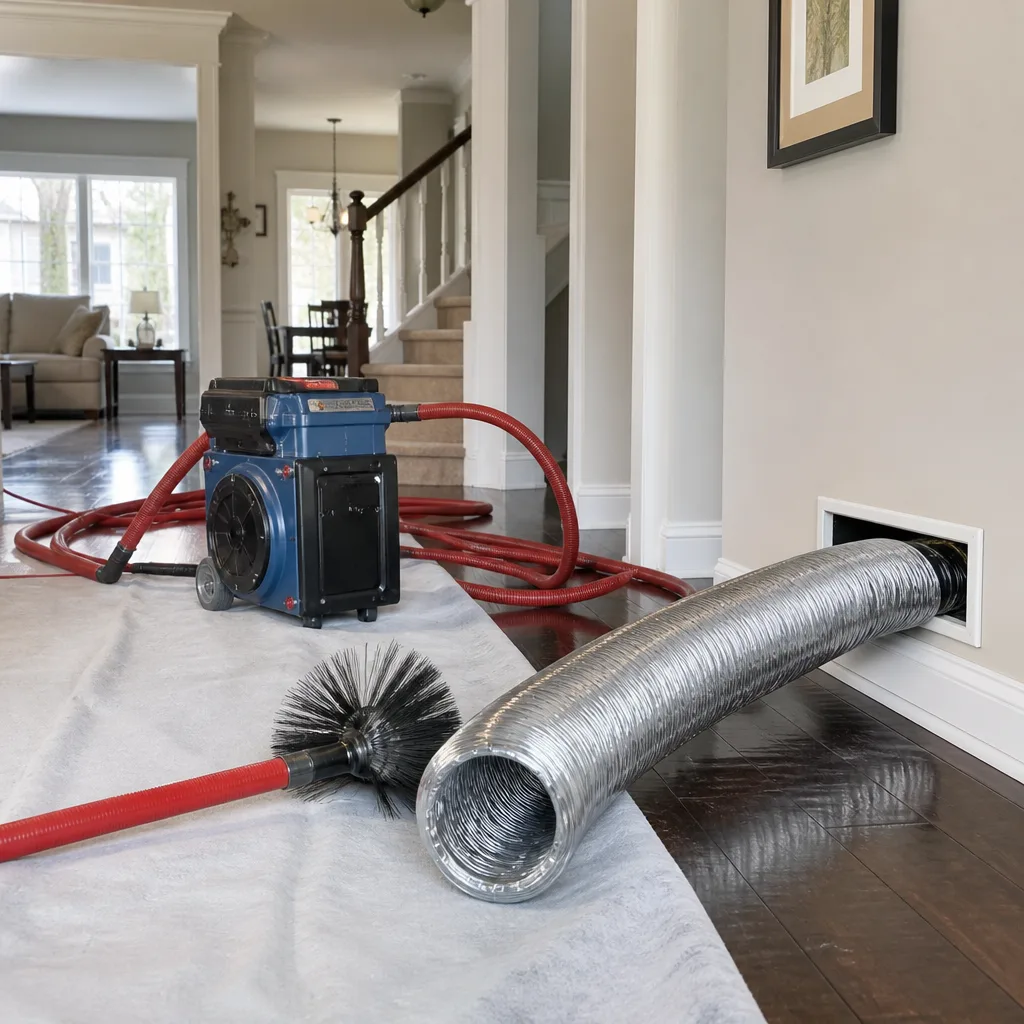 Whole-home duct cleaning
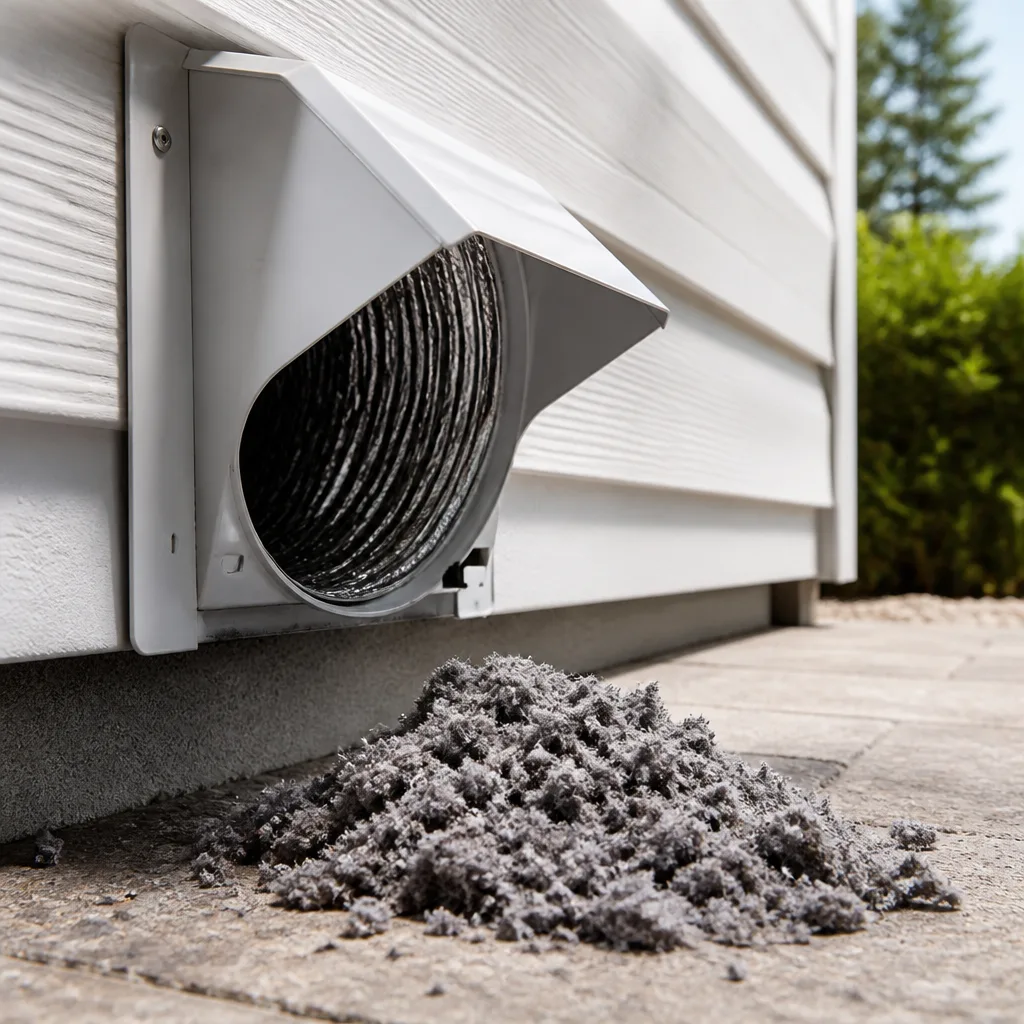 Dryer vent cleaning
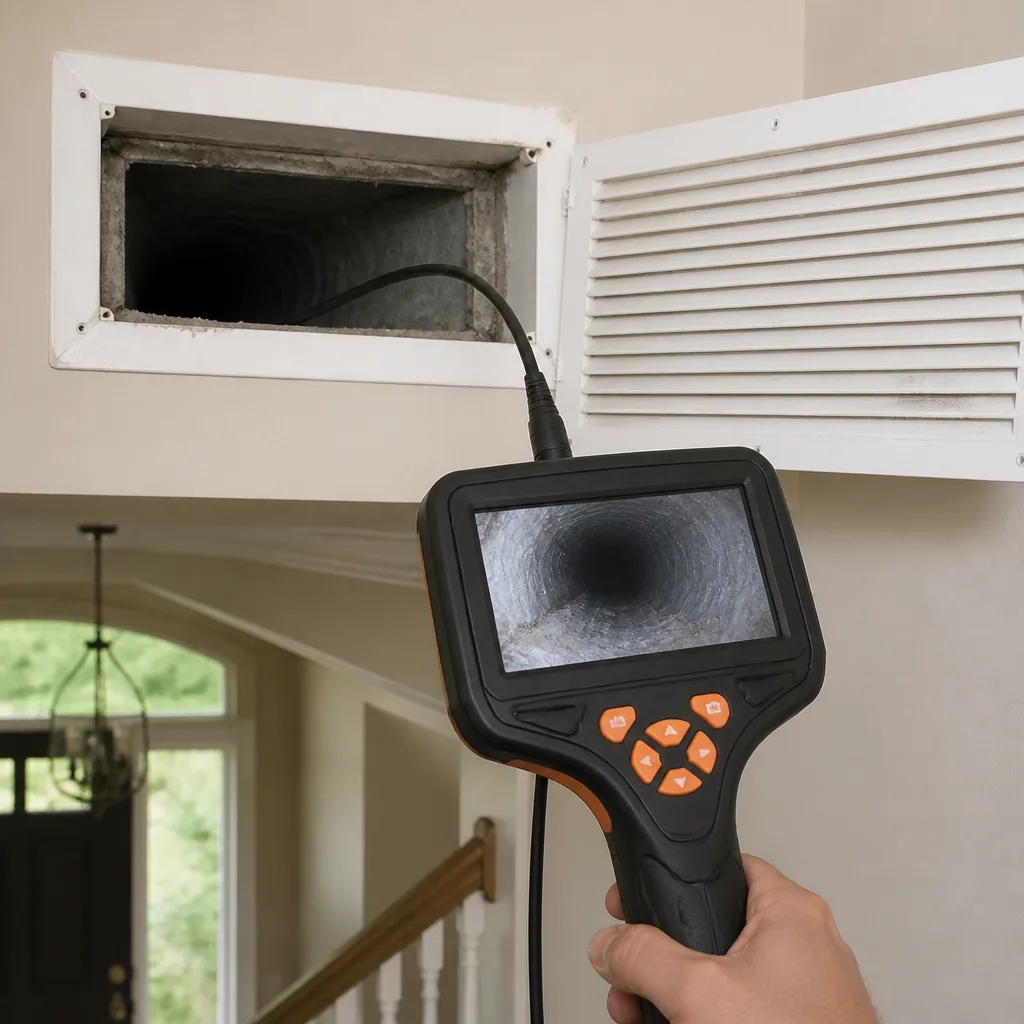 Camera inspection
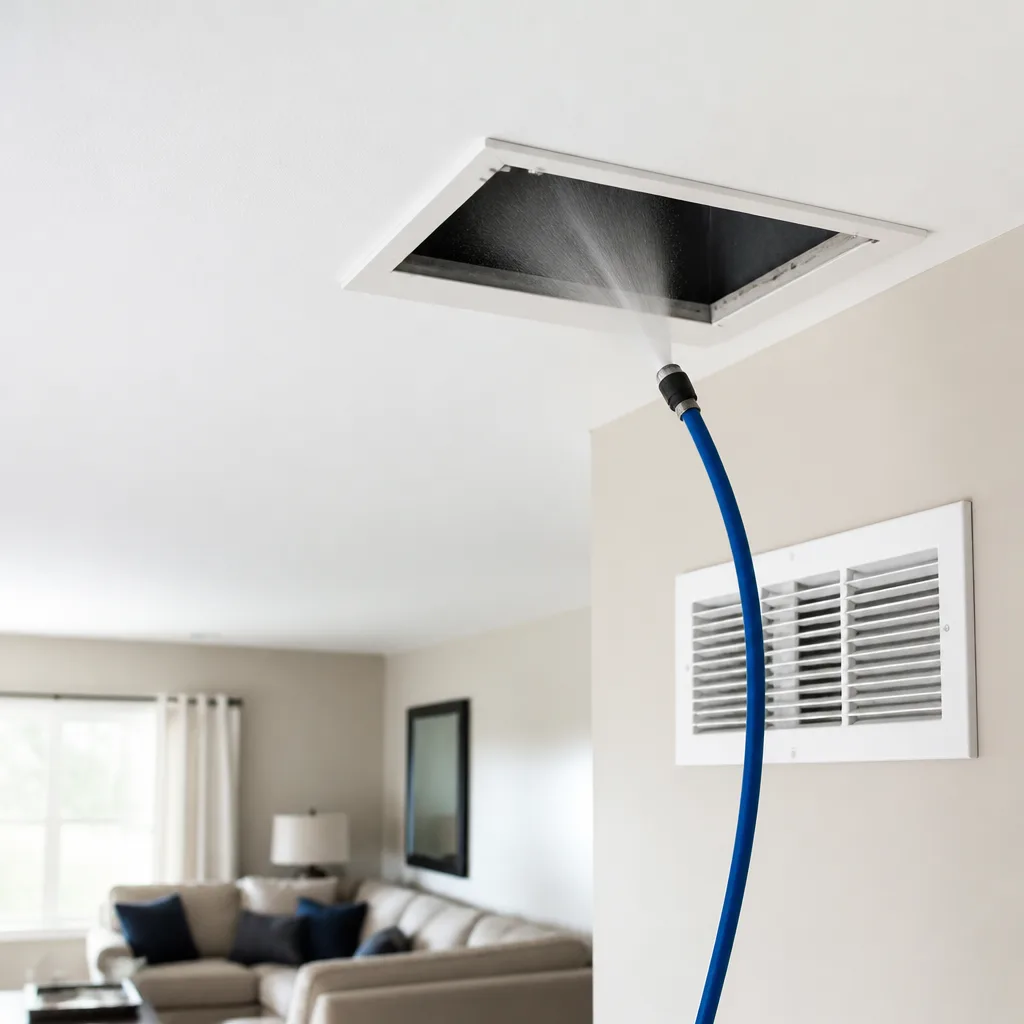 Sanitizing & deodorizing
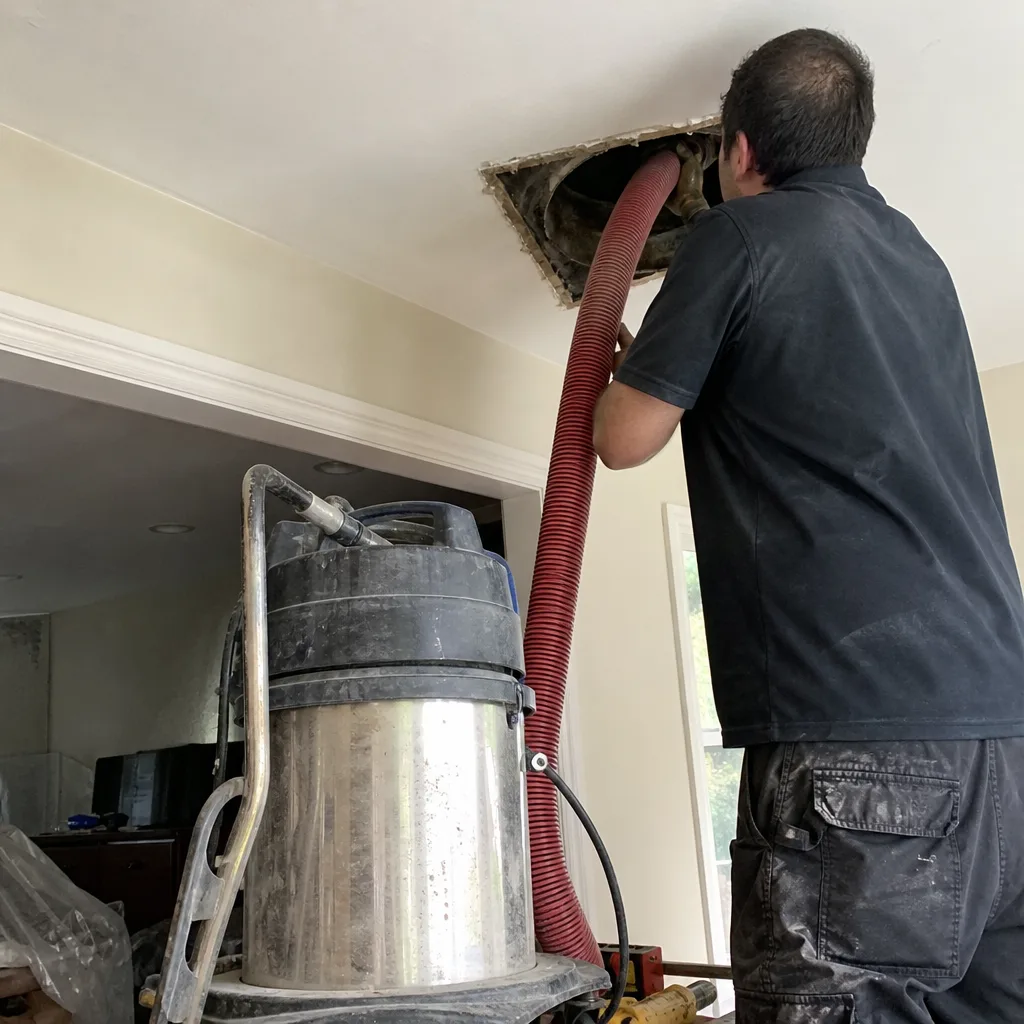
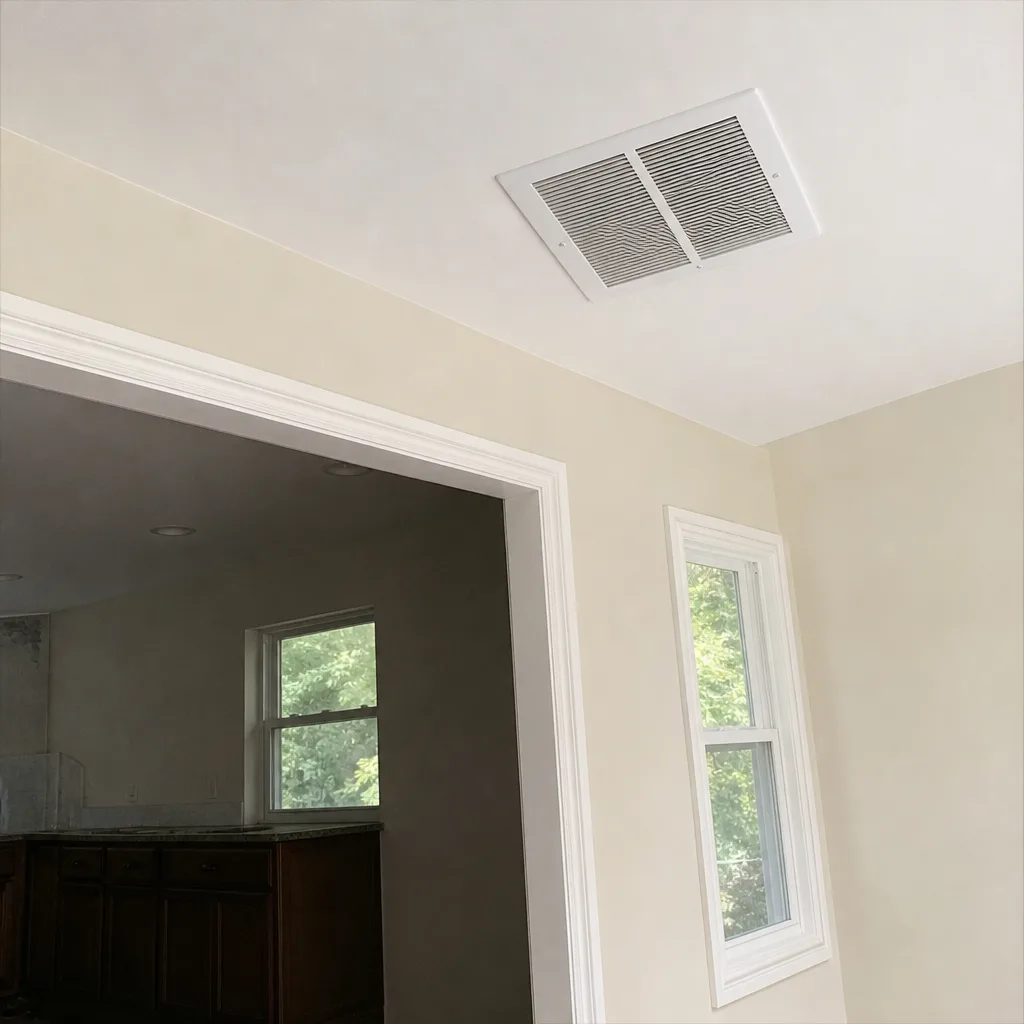
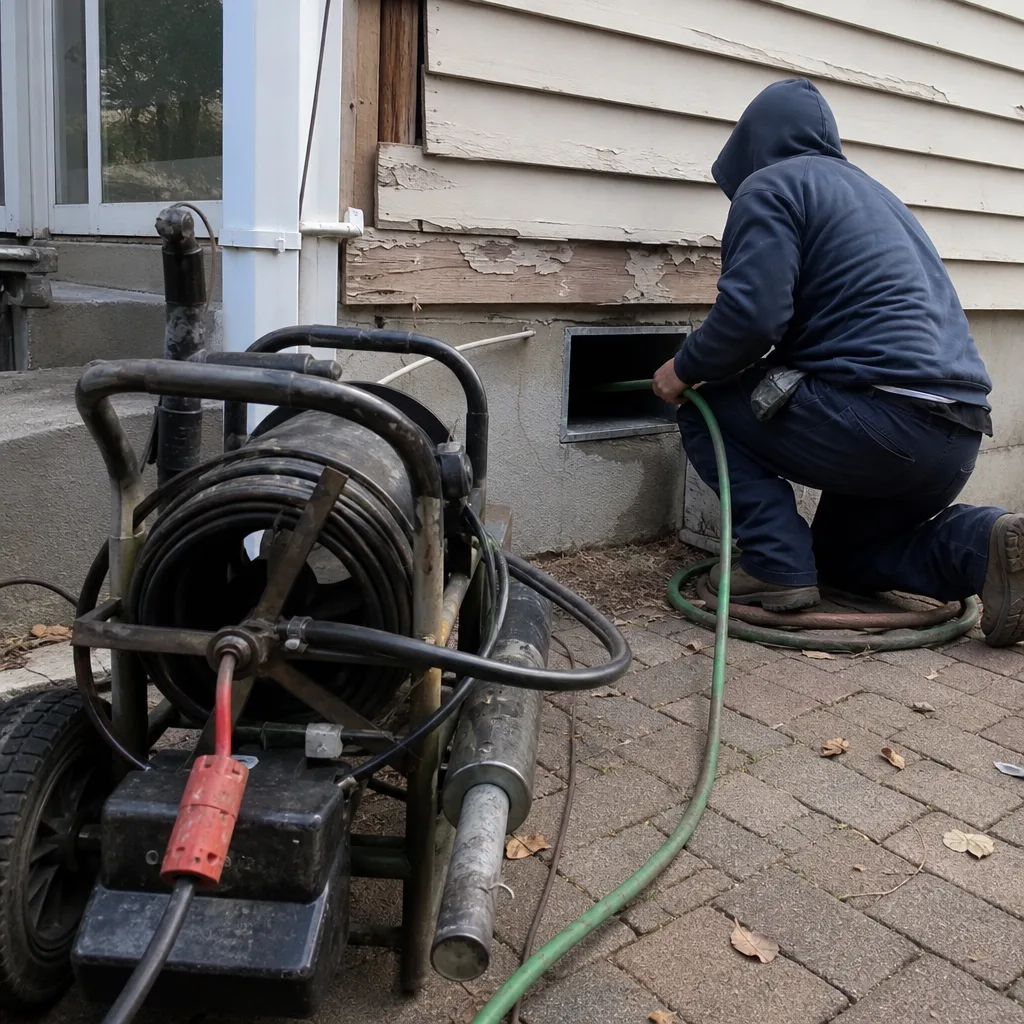
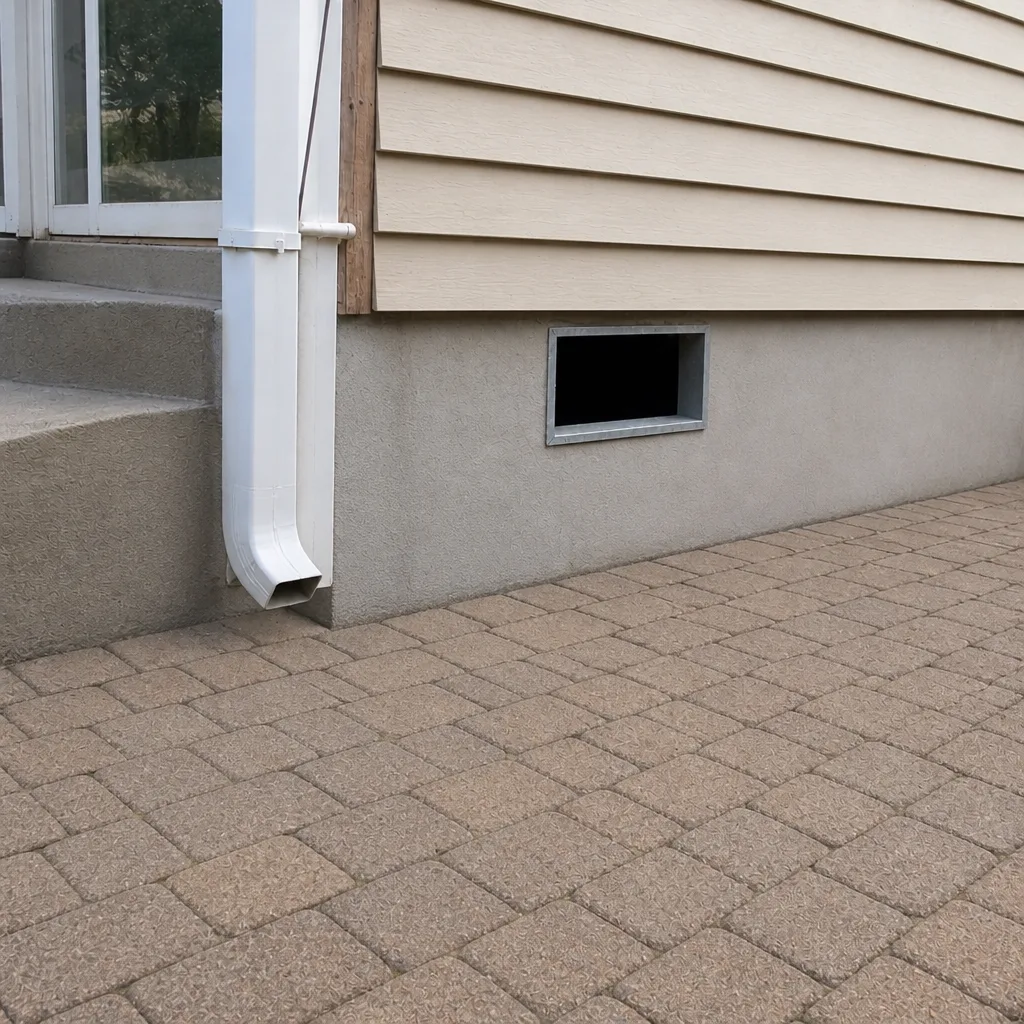
Whole-system duct and dryer vent check with before-and-after photos - you see exactly what came out of your vents
That "$99 whole-house special" is a bait ad - the real number appears once they are in your hallway, or the "clean" is a shop-vac at the register. We photograph the inside of your ducts before and after instead.
Air Duct Cleaning Maintenance Schedule: What to Do and When
The 3-to-5-year rule you’ve heard for duct cleaning was never a tested performance threshold. It came out of industry guidance that leaned conservative to manage liability, and it treats every home like the same home. A Woodside row house with two dogs, a finished basement, and a renovation in its recent past is not on the same accumulation curve as a quiet third-floor co-op with one resident and no pets. Treating them as identical is how people either waste money on premature cleaning or let a real buildup sit for years. This guide gives you the variables that actually matter, so you can build a defensible schedule for your own home instead of borrowing someone else’s calendar.
Quick Answer
Air ducts should be cleaned every 3 to 5 years in a typical Woodside home with no major multipliers. Cut that interval to every 2 to 3 years if you have pets, smokers, recent renovation debris, allergy sufferers, or low-grade MERV filtration. Let your filter behavior and visible dust patterns set the actual date, not the calendar.
Styles & brands we work with
- Whole-home duct cleaning
- Dryer vent cleaning
- Camera inspection
- Sanitizing & deodorizing
Table of Contents
- Why the Standard 3-to-5-Year Rule Is Weaker Than It Sounds
- The Five Multiplier Factors That Compress Your Timeline
- How to Use Your Filter as a Leading Indicator
- Maintenance Tasks You Can Do Between Professional Cleanings
- Why Post-Renovation Cleaning Is Mandatory, Not Optional
- How to Keep a Maintenance Record That Actually Holds Up
- System Type and Duct Material Change the Schedule
- Signs You’re Past Due, Regardless of the Calendar
Why the Standard 3-to-5-Year Rule Is Weaker Than It Sounds
A fixed interval assumes every duct system collects debris at the same rate. That assumption falls apart the moment you look at two different homes in Woodside. A two-family house on a busy avenue with a dog, a gas stove running daily, and a 1980s furnace pulls in a completely different load than an apartment near the 61st Street-Woodside station where the windows stay closed and there are no pets.
The 3-to-5-year figure also came from a liability-conservative place rather than a performance one. It’s a reasonable default. It is not a measurement of your ducts. What actually determines accumulation is a combination of:
- How many people and pets occupy the space
- How well the return-air system is filtered
- Whether the home has had recent construction, drywall work, or new flooring
- How the HVAC system was sized and how often it runs
- What the ductwork is made of and how well its seams are sealed
In our experience across Woodside homes, the homes that get cleaned on a strict 5-year clock are often the ones where the ducts didn’t need it yet. The homes that actually needed service at year 2 or year 3 were usually the ones that added a pet or finished a basement and never adjusted their schedule. The calendar was fine. The assumption behind it wasn’t.
There’s a second problem with the fixed rule: it says nothing about what gets cleaned. A one-time surface pass with a cheap brush vacuum moves some dust around. It does not remove the settled debris on duct walls, and it does nothing to address what happens to that debris once it’s airborne. If you’re going to put a date on the calendar, the worth of that date depends entirely on what happens when someone shows up. Professional-grade equipment from Rotobrush and Nikro is the baseline for a real cleaning, not a shop vacuum with an extension hose.
The Five Multiplier Factors That Compress Your Timeline
Think of the standard interval as a starting number, then apply a multiplier for each factor that fits your home. Each one shortens the interval because each one adds either particulate load or circulation of what’s already there. When two or more apply, shorten the timeline meaningfully rather than just by a little.
1. Pets. Pets shed dander and hair that gets pulled into return air and settles on duct surfaces. Homes with one or more animals are typically ready for cleaning sooner than a no-pet home. This is not about smell. It’s about the volume of fine organic material that enters the system and stays there.
2. Smokers in the home or a previous occupant who smoked. Residue from cigarette smoke binds to duct surfaces and stays put long after a home changes hands. Anyone buying or renting a home where someone smoked should treat the ducts as due regardless of when they were last cleaned. Surface sanitizing after cleaning matters in these spaces in a way it doesn’t in a cleaner home.
3. Recent renovation debris. Drywall dust, sawdust, insulation fibers, and construction grit get pulled straight into return grilles while work is going on. The problem is that the debris often settles inside the ducts and never leaves. Renovation is one of the strongest triggers, covered in its own section below.
4. Occupant allergies or respiratory conditions. When someone in the house reacts to dust, the acceptable level of settled debris inside the system is much lower. That’s not a marketing line. It’s a practical reality that shifts the whole schedule forward, and sanitizing with a Guardsman-brand treatment can help manage the surface after cleaning.
5. MERV-8-or-below filtration. If your filter is a basic fiberglass or low-MERV pleat, more fine debris is getting through to the coil and the ducts. If that describes your setup, expect to clean more often, or upgrade the filter and watch the interval stretch out.
Add a multiplier for each one that fits, then compress the base interval. A Woodside house with a dog and a recent bathroom renovation is working from a much shorter timeline than the standard rule suggests.
How to Use Your Filter as a Leading Indicator
Your filter tells you more about your duct load than any calendar. If you learn to read it, you can stop guessing. Check it at 30 days, again at 60, and again at 90. What you see will sort your home into one of three patterns.
- At 30 days: The filter should show light, even dusting. If it’s already matte gray and dense with fine debris, your system is pulling heavy particulate and your duct schedule should tighten. If it looks almost new, you have headroom.
- At 60 days: Even loading is normal for most Woodside homes. Gray or slightly dark is fine. Visible hair, fiber clumps, or a thick coating on one side means uneven airflow is pushing debris to one part of the filter, which often points to return-side framing or duct issues.
- At 90 days: A filter that is uniformly dark and losing airflow is doing its job but at capacity. A filter that is nearly clean at 90 days means your ducts are not moving much debris, and your cleaning interval can stretch.
There’s a specific pattern to watch for. If the filter loads fast on the return side but the supply registers in the rooms are dusty anyway, that’s a signal that debris is either settling in the ducts or bypassing the filter frame. In either case, closer duct inspection is a reasonable next step. The filter is measuring the load. The dust in the rooms is measuring what’s getting through.
One more filter note: check the MERV rating actually printed on your filter, not what you remember buying. Homes in Woodside with a low-MERV filter that gets swapped every 90 days develop duct buildup at a different rate than homes running a higher-MERV pleat. If you don’t know which you have, pull it and read the label. It takes a minute and it changes your schedule.
Maintenance Tasks You Can Do Between Professional Cleanings
Regular cleaning handles the inside of the system. The work you do between cleanings keeps your ducts from accumulating faster than they need to, and it flags problems early. None of this requires tools or technical skill, and none of it replaces a professional cleaning.
Vacuum your supply registers monthly. With the HVAC system off, vacuum the face of each supply register and the grate along the floor or wall where dust accumulates. This keeps the visible surface from building up and gives you a clean baseline so you can spot when dust returns faster than it should.
Inspect return grilles every other month. Pop the grille off (most are held by two screws or a hinge) and look at the inside edge and the filter behind it. Loose debris, hair, or fiber buildup right at the return is a sign your filtration is underperforming. If you see an obvious debris mat inside the return, don’t vacuum deep into the duct yourself. That’s a call-a-professional situation, especially if you have flexible duct, which can be damaged by a homeowner vacuum.
Check your drip pan and drain line. If you have central air, look at the condensate pan under the indoor coil. Standing water or dark residue means the pan is not draining. That’s a moisture problem separate from dust, but it will feed biological growth in the ducts if it’s not corrected. Clear any algae or debris from the drain line at the pan end. If standing water persists, get it looked at.
Watch the supply registers in the room above your air handler. If that room sees dust returning faster than the rest of the house, the return duct or the plenum connection is often the source. It’s cheap to check and often easy to fix with proper sealing.
Keep the system running with a clean filter in place. A dirty filter on a running system is worse than a clean filter on an idle one, because every hour the blower runs, it’s pulling unfiltered air through the coil and into the ducts. When in doubt, swap it.
None of this is exotic, but it does two things. It stretches the interval between professional cleanings, and it forces you to look at the system regularly enough to catch problems before they compound. A trained eye on your own registers every month catches more than any calendar reminder.
Why Post-Renovation Cleaning Is Mandatory, Not Optional
Renovation triggers a cleaning regardless of when the last one happened. If you finished a bathroom, kitchen, basement, or flooring project in the past 12 months, the ducts should be cleaned. This is not a soft recommendation. It’s the single strongest multiplier on the list.
Here’s what happens during construction. Drywall sanding, cutting of lumber, removal of old flooring, and insulation work all release fine particulate. Your HVAC system is usually running during at least part of the project, because contractors need light, heat, or cooling. Every hour that blower runs, it pulls construction dust into the return grilles and pushes it into the supply runs. Most of that dust doesn’t reach the filter because it settles inside the ductwork first.
What makes this worse than ordinary dust is composition. Drywall dust is abrasive. Sawdust is flammable in a fine enough concentration. Insulation fibers are irritating. None of that belongs sitting inside the ducts for years. If your filter is a low-MERV pleat or a fiberglass panel, the fine construction dust gets through more of it than you would hope.
The right sequence after construction:
- Finish all sanding, cutting, and demo work in the home.
- Vacuum and wipe all surfaces thoroughly, including inside cabinets and along trim.
- Replace the HVAC filter with a fresh one.
- Have the ducts professionally cleaned, with containment so that dislodged debris is captured and removed rather than pushed into the living space.
- Replace the filter again after the cleaning.
The containment step is what separates a real post-renovation cleaning from a quick pass. Abatement Technologies negative-air and HEPA containment equipment is the right category of tool for this work, because the entire point is capturing what gets loosened rather than redistributing it. In Woodside, where a lot of homes have tight basements and limited return capacity, that containment step matters more than usual.
How to Keep a Maintenance Record That Actually Holds Up
A maintenance record is worth having not because you’ll frame it, but because it settles arguments later. If you sell the home, rent it out, or find yourself dealing with an indoor air quality complaint or a warranty question, being able to produce dates and details ends conversations fast.
The record should be simple and consistent. It doesn’t need to be elaborate:
- Duet cleaning dates – the date of each professional cleaning, who performed it, and what equipment was used (photograph the invoice).
- Filter changes – date and MERV rating each time you change the filter.
- Renovation milestones – the date major work started and finished in the home, and the date of the post-renovation cleaning.
- HVAC service records – coil cleanings, repairs, and any sealing work done to the duct system.
- Air quality observations – the date you first noticed a dusty room, an odor, or a family member’s symptoms, and what changed after.
Keep it in one place. A folder with printed invoices works. A notes app with dates works. What doesn’t work is relying on memory and then trying to reconstruct a timeline two years later when a buyer asks when the ducts were last cleaned.
There’s a specific value here for property managers in Woodside. When a tenant raises an air quality concern or a contractor asks whether the ducts were cleaned after a renovation, a dated record lets you answer factually instead of guessing. That protects the property manager and, more importantly, the person living in the unit. Photographs of the cleaning, taken before and after, are worth keeping for the same reason. Any contractor who takes their work seriously should be able to hand those photos to you.
System Type and Duct Material Change the Schedule
Not all duct systems age at the same rate. The material and the layout of your ducts in Woodside will influence how quickly debris accumulates and how long the cleaning takes.
Sheet metal ducts with properly sealed seams hold up well. They accumulate dust but resist collapse and can be cleaned thoroughly with standard equipment. If the seams are taped rather than sealed with mastic, you’ll often see dust leaking into the space around the ducts, which means you’re breathing part of your duct load even when the system looks clean.
Flexible duct (flex duct) is common in newer installations and retrofits. It’s sloped, easy to route, and cheap to install, but it collects debris in the sagging low points where airflow slows. It also can’t be scrubbed the way sheet metal can, and aggressive cleaning can tear the inner liner. Flex duct runs that sag noticeably should be inspected more often than metal. If the liner is torn, repair is needed before cleaning.
Duct board and lined interior surfaces hold dust on the textured surface and need more careful cleaning than metal. The liner can trap debris where a standard brush cannot fully reach. In older Woodside homes that still have lined trunk ducts, this is worth a closer look.
Sealed versus unsealed systems. Every gap in duct seams, every disconnected boot at a register, and every poorly fitted return grille lets unfiltered air and debris into the system. Homes with a lot of leaky connections accumulate faster and also waste energy. Duct repair and sealing often reduces how often you need cleaning, because it stops the leak of bypass dust at the source. That’s a maintenance action worth doing before it becomes a cleaning action.
If you don’t know what kind of ducts you have, the technician who comes out should tell you before any work starts. If a walkthrough in your Woodside home starts with an estimate but not a look inside the system, that’s a flag.
Signs You’re Past Due, Regardless of the Calendar
Calendar dates are a starting point. The system itself will tell you when it’s ready for cleaning. If you see any of the following, the ducts are due now regardless of when they were last cleaned.
- Dust returns to surfaces within 48 hours of a full-house cleaning, especially on horizontal surfaces like shelves and tops of picture frames.
- A musty or stale odor is noticeable when the system first starts running.
- Visible dust streaks at supply registers or along the face of return grilles.
- Family members with allergies or asthma report symptoms getting worse inside the home.
- You notice visible debris or a dark mat inside a return grille when you look in.
- The HVAC system runs longer or cycles more often than it used to, without a clear cause.
- You’ve moved into a new or inherited home and can’t confirm the previous cleaning date.
Two of these warning signs are worth a closer look because they show up so often in Woodside homes. The first is dust returning immediately after cleaning. That usually means something upstream is still feeding debris into the system, whether a leaky return, a dirty coil, or an old filter. The second is an odor at startup, which points to moisture or organic growth inside the system, not just settled dust. Both warrant a technician’s look rather than another round of cleaning. You can see the wider picture of what air duct cleaning involves if you want to know what a full service should include.
Common Mistakes to Avoid
- Cleaning on a strict 5-year clock with no attention to home changes. A pet, a smoker, or a renovation changes the accumulation rate, but a calendar doesn’t know that. Adjust the interval when your household changes.
- Skipping post-renovation cleaning to save on the cost. The debris from drywall and flooring work doesn’t clear out on its own, and it stays in the system for years. Do the cleaning after the sanding is done, not before.
- Vacuuming deep into flex duct yourself. Flexible duct has a thin inner liner, and a homeowner vacuum nozzle or brush will tear it. Once it tears, debris collects in the tear, and repair is the next step. Leave the duct interior to professional equipment.
- Buying a higher-MERV filter without confirming the system can handle it. Oversized filtration on an undersized return can choke airflow. If you’re upgrading, check the filter’s actual restriction rating against what the system was designed for, or ask a technician.
- Assuming “cleaned” means done. A cleaning that only sanitizes or only vacuums the surface doesn’t remove settled debris on the duct walls. Full cleaning means source removal with real equipment, and it should include containment while it happens.
- Ignoring visible leaking at return grilles and boots. Unsealed connections pull unfiltered air into the system, and cleaning them without sealing means the problem comes back. Duct repair and sealing after cleaning is often the piece that makes the cleaning last.
- Not keeping records. A date on the invoice or a photo of the filter change is worth more than a memory when you’re dealing with a buyer, a tenant, or a warranty issue. Keep the invoices and take the photos.
See the difference
 Before
 After
 Before
 After
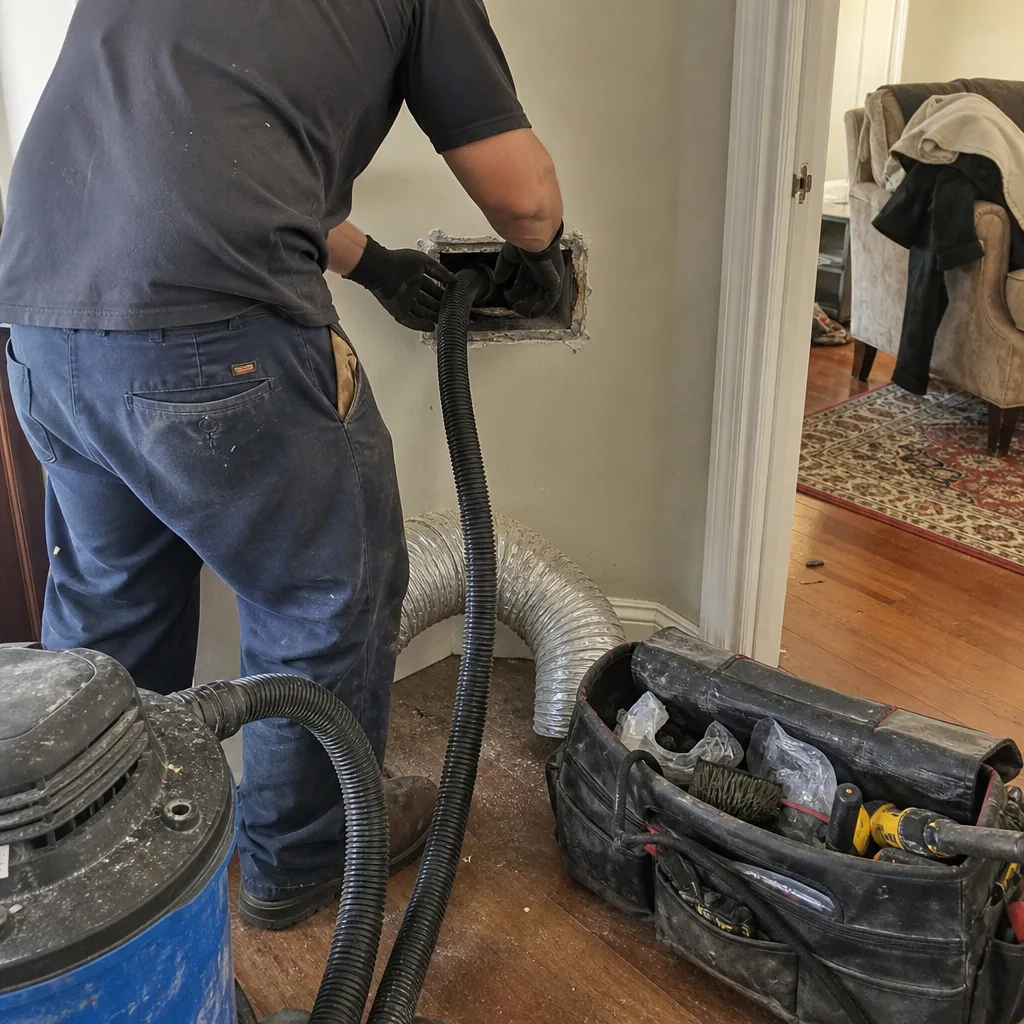 Before
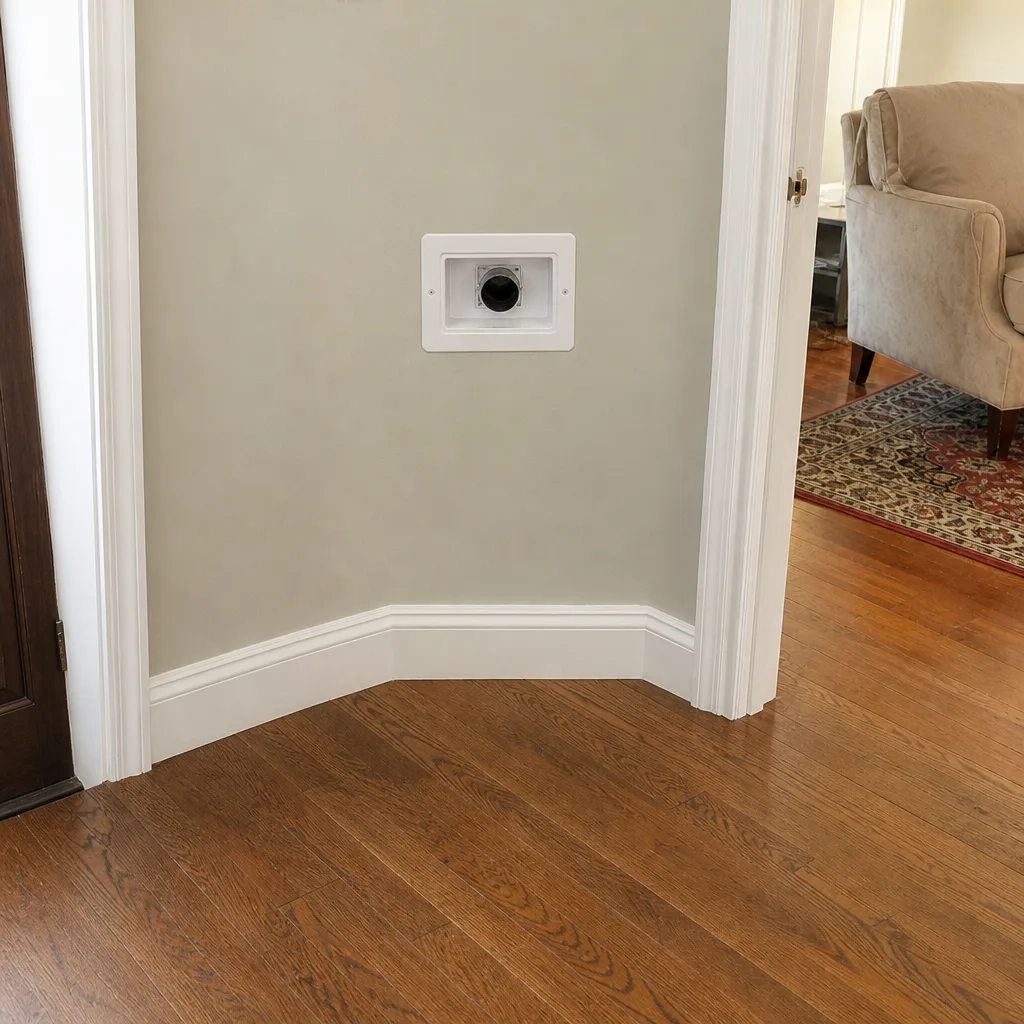 After
When to Call a Professional
Some situations call for a professional cleaning even if you’re inside your standard interval. Call when you see a visible dust mat inside a return grille. Call after any renovation that produced drywall dust or flooring debris. Call if someone in the home has worsening allergies or a new respiratory condition. Call if you smell a musty or stale odor when the HVAC system starts, because that points to moisture inside the system. Call if the previous cleaning date is unknown and you’ve recently moved into the home. And call if you can see visible damage to the ducts themselves, whether a sagging flex run, a loose register boot, or a torn liner, since that’s a repair job before it’s a cleaning job. A trained technician can tell the difference between what’s due for cleaning and what’s due for repair and sealing. Air Duct Cleaning Woodside offers free estimates in Woodside. Call (877) 792-6795 to set one up. We answer 24/7. Fast dispatch from 7am to 7pm, Sunday through Friday.
Frequently Asked Questions
Every 3 to 5 years is a reasonable baseline for a typical Woodside home with no major multipliers. Cut that to every 2 to 3 years if you have pets, smokers, recent renovation work, allergy sufferers, or MERV-8-or-below filtration. The best way to set your actual interval is to watch filter loading and room dust rather than trust the calendar alone. For a home-specific recommendation, call (877) 792-6795. Estimates are free.
Yes. Pets add dander, hair, and fine organic material to the return air, and that material settles inside the ducts. Homes with one or more animals typically need cleaning on a shorter interval than no-pet homes, and the difference is noticeable when the system is inspected. If you’ve recently added a pet to a Woodside home, it’s worth moving your next cleaning date forward.
Yes, always. Renovation is a mandatory trigger regardless of when the last cleaning happened, because drywall dust, sawdust, and insulation fibers get pulled into the return air and settle in the ducts. Wait until all sanding and cutting work is finished, then clean with containment so the debris is removed rather than pushed around. For a free estimate, call (877) 792-6795.
You can vacuum register faces and inspect return grilles yourself, and it’s worth doing monthly. What you shouldn’t do is vacuum or brush deep inside the ducts, especially flex duct, because the inner liner tears easily. Removing settled debris from the duct interior requires professional-grade equipment from brands like Rotobrush and Nikro, with containment to capture what gets disturbed. If you suspect interior buildup, it’s a professional job.
Ask for before-and-after photos of your ducts, taken during the cleaning in the same location. Any experienced contractor should be willing to supply them. The other marker is method: a real cleaning uses professional duct-cleaning equipment and containment, not a shop vacuum with a hose. If you’re not given photos or a clear account of the equipment used, follow up. To talk through what a job will actually look like before you book, call (877) 792-6795.
Dryer vent cleaning runs on a separate schedule from your air ducts, and it’s worth treating it that way. The vent accumulates lint that air ducts don’t, and lint buildup is a fire risk that has nothing to do with duct dust. Most homes benefit from an inspection at least once a year, and more often in busy households. See what dryer vent cleaning involves if you want the full picture.
The Bottom Line
The best schedule for air ducts in Woodside is the one built around your home, not someone else’s calendar. Start with a 3-to-5-year baseline, then apply the five multipliers: pets, smokers, renovation debris, allergies, and low-grade filtration. Use your filter at 30, 60, and 90 days as a leading indicator rather than guessing. Do the small tasks between cleanings so buildup slows down. Always clean after a renovation. Keep dated records of every filter change and cleaning so you can answer a buyer, a tenant, or a warranty question without guesswork. The right equipment matters too, and full-service HVAC cleaning addresses the coil and handler alongside the ducts. When the system tells you it’s due, listen to it. Call (877) 792-6795 for a free estimate. We answer 24/7. Fast dispatch from 7am to 7pm, Sunday through Friday.